Let our Video Blogs help you

"Get Real Estate Smart!"

Here at The Miller Group, we like to provide current and future homeowners the information they need to help them make the right decisions when they are buying, selling or investing in real estate. This is why we continue to share our expertise via Video Blogs on our website for everyone to see. We firmly believe that in the real estate market that "Knowledge is Power!"  Let our expertise empower you with your real estate needs.

Always feel free to Contact Us if you need our help!

Oct. 8, 2026

Selling a House With Solar Panels in Florida | Seller Guide

Central Florida Home Seller Guide

Selling a House With Solar Panels in Florida? Know This Before You List

If you're thinking about selling a home with solar panels, there's one thing you don't want to discover after you're already under contract: you aren't sure what has to happen with your solar agreement.

Whether your panels are owned, financed, or leased can affect what happens during the sale. And the answer isn't always as simple as having the buyer take over the payments.
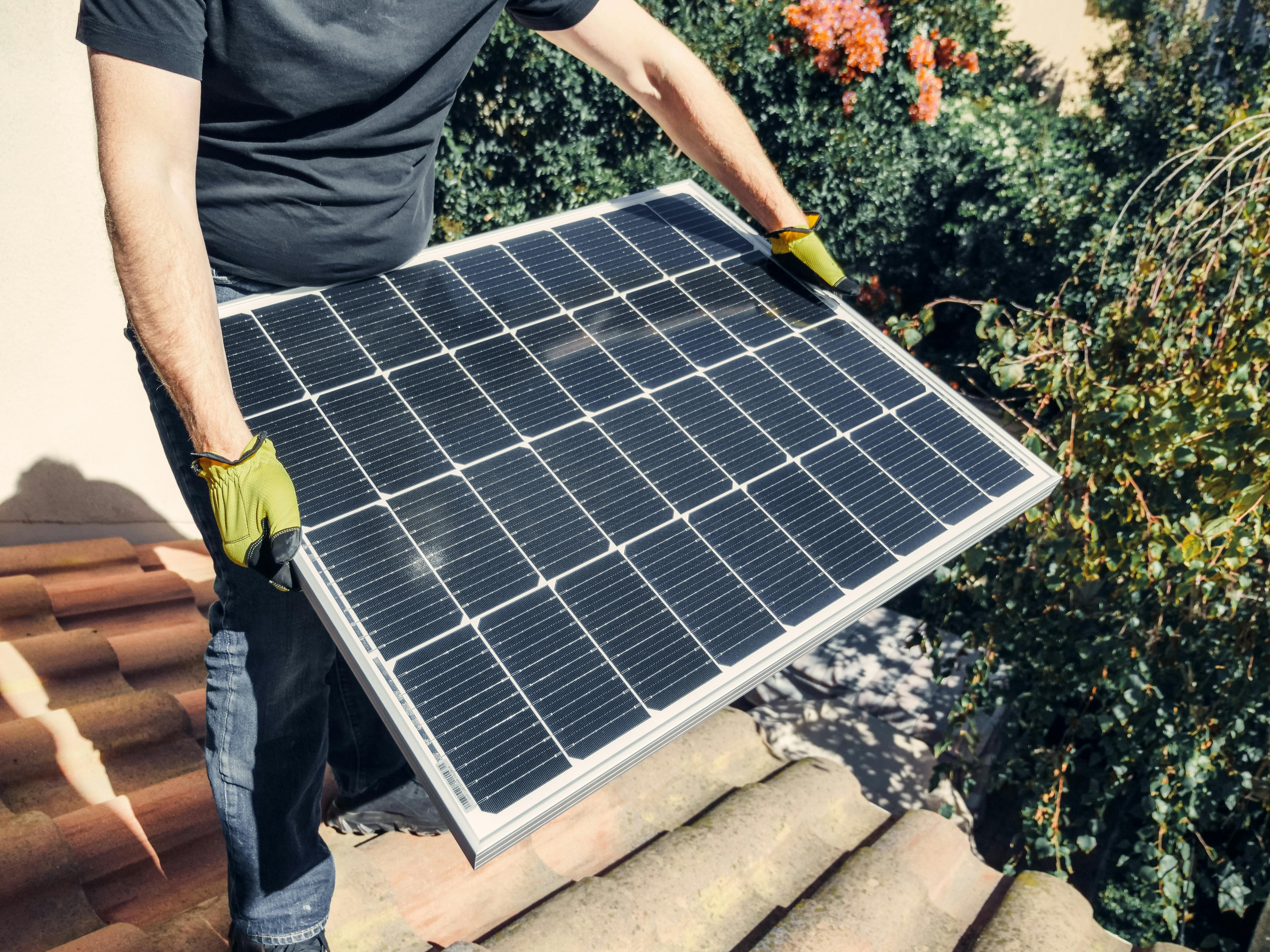
House with rooftop solar panels
A simpler way to approach selling a home with solar:
  1. Find out exactly how your solar system is owned or financed.
  2. Understand what your agreement requires when you sell.
  3. Handle those questions before a buyer is waiting on the answer.

Watch: The Solar Question Sellers Should Answer Before Going Under Contract

David explains the issue in under a minute—and why it's much easier to deal with before there's a buyer and a closing date involved.

Having solar panels doesn't automatically mean selling your home will be difficult. The important part is understanding your particular setup early enough to make a plan.

Here's what Central Florida homeowners should know before putting a home with solar panels on the market.

First, Find Out What Kind of Solar Agreement You Actually Have

Many homeowners simply think of them as "our solar panels."

But when you're preparing to sell, there's an important difference between panels you own outright, panels you're still paying for, and panels owned by a solar company.

Owned Outright

If you've completely paid for the system and own the solar panels, this is generally the most straightforward situation. The panels will typically stay with the property unless the sales contract says otherwise.

Financed

If you own the system but still have a solar loan, you'll want to find out the remaining balance and what your lender requires when the property is sold.

Leased or Third-Party Owned

If another company owns the equipment, your agreement may include requirements for transferring the arrangement, qualifying the buyer, buying out the system, or completing other steps.

The important part isn't guessing which situation you're in.

Pull the actual paperwork and confirm it. That's much easier to do before you have an offer and a closing timeline.

Can You Sell a House If You Still Owe Money on the Solar Panels?

In many cases, yes. Having an outstanding solar obligation does not automatically prevent you from selling your home.

But what happens next depends on the agreement.

Depending on the solar financing, there may be a payoff, transfer, assumption, or other requirement that needs to be addressed as part of the transaction.

The buyer's mortgage lender may have requirements of its own as well.

A good question to ask your solar provider before listing:
"If I sell my home, what exactly happens to this agreement?"

Then ask for the answer in writing along with any applicable payoff information, transfer requirements, fees, approval requirements, or forms.

Does the Buyer Just Take Over the Solar Payments?

Not necessarily.

This is one of the assumptions that can create confusion for sellers.

Even if your solar agreement allows a transfer, that doesn't always mean a buyer can automatically take it over. The buyer may need to meet certain qualifications, their lender may need to review the agreement, and the solar provider may have its own transfer process.

That's why it's better to know the rules before you're negotiating an offer.

Can Solar Panels Affect a Buyer's Mortgage?

They can, depending on how the system is owned or financed.

Certain solar payments or obligations may need to be considered when the buyer's lender reviews their mortgage application. Other arrangements may be treated differently.

The important takeaway for a seller isn't to become an expert in mortgage underwriting.

It's simply this: make the documentation available early so the buyer and their lender can determine what applies.

Do Solar Panels Increase the Value of Your Home?

They may influence value, but there isn't one universal number that should automatically be added to your home's asking price.

The impact can depend on several things, including whether the system is owned, how buyers in your area respond to solar, the characteristics of the system, and what comparable homes are showing in the local market.

An owned system may also be viewed differently from a leased or third-party-owned system.

Instead of assuming the amount you spent on solar equals the amount you'll get back when you sell, look at the bigger picture of your home and your specific Central Florida market.

Homeowners reviewing paperwork before selling their home

What Should You Do Before Listing a Home With Solar Panels?

You don't need to have every answer memorized.

You do want to collect the information that can help your real estate agent, the buyer, the lender, and the closing team understand the situation.

1

Find Your Original Solar Agreement

Pull the actual purchase agreement, financing documents, lease, power purchase agreement, or other paperwork connected to the system.

2

Confirm Whether You Still Owe Anything

If there is a loan, lease, or other ongoing agreement, request your current balance or account information.

3

Ask What Happens When the Home Is Sold

Find out whether the agreement can be transferred, whether the buyer must qualify, whether there are fees, and whether there are any payoff or processing requirements.

4

Gather Your Solar Documents

Keep your warranties, installation records, permits, current statements, financing information, and any available system or production documentation together.

5

Talk About It Before You Accept an Offer

Your real estate agent and the appropriate lender, title or closing professional, solar provider, or attorney can help clarify what applies to your situation.

Home sellers reviewing documents during a real estate transaction

The Problem We're Trying to Help Sellers Avoid

Imagine accepting an offer you're excited about.

Inspections are scheduled. You're making plans for your next home. The buyer is working through their financing.

Then someone asks: "What's happening with the solar agreement?"

And no one has the answer yet.

Now you're trying to track down documents and figure out requirements while everyone is working toward a closing date.

That's exactly why we prefer to ask these questions before the house goes under contract.

A Smoother Home Sale Usually Starts Before the Sign Goes in the Yard

Selling a home isn't only about choosing a price, taking great photos, and getting buyers through the door.

Good preparation also means identifying the details that could create questions later and getting ahead of them.

Solar panels are one example.

If you're thinking about selling your Central Florida home, understanding how your solar system fits into the sale can give you more clarity before buyers enter the picture.

Frequently Asked Questions About Selling a House With Solar Panels in Florida

Can I sell my house if I still owe money on my solar panels?

Potentially, yes. The exact process depends on the financing agreement. The remaining balance may need to be paid, transferred, assumed, or otherwise addressed as part of the sale. Review your agreement and contact your solar financing company before listing.

What happens to my solar loan when I sell my house?

That depends on the terms of your solar financing. Some agreements may allow a transfer or assumption, while others may require the remaining balance or another obligation to be addressed as part of the sale.

Does the buyer have to take over my solar loan?

Not necessarily. Whether a solar loan can be transferred or assumed depends on the agreement, the solar lender, the buyer's qualifications, and the buyer's mortgage financing.

Can I sell a house with leased solar panels?

Yes, but you'll want to review the lease carefully. Depending on the agreement, the buyer may be able to assume the lease, may need to qualify with the solar company, or another option may need to be arranged.

Do solar panels automatically transfer to the new homeowner?

Not every solar arrangement works the same way. An owned system and a leased or financed system can have very different requirements. Check the agreement before assuming the system or its payments will automatically transfer.

Will I have to pay off my solar panels before closing?

Sometimes, but not always. The answer depends on your specific financing agreement, any interests connected to the system, the buyer's financing, and the solar provider's requirements.

Can solar panels affect a buyer's debt-to-income ratio?

Certain solar payment obligations can be considered during a buyer's mortgage qualification, depending on the type of agreement and the lender's underwriting requirements. This is why having the documentation available early is helpful.

Do solar panels increase my home's value?

Solar panels can influence how buyers and appraisers view a property, but there is no universal dollar amount or percentage that should automatically be added to a home's value. Ownership, system characteristics, local market reaction, and comparable sales can all matter.

Will an appraiser give me credit for my solar panels?

It depends on the system and the market. Appraisers generally consider evidence of how buyers in the local market react to the feature. An owned solar system may also be treated differently from leased or third-party-owned equipment.

What paperwork should I gather before selling a home with solar?

Start with your original purchase, financing, lease, or power purchase agreement. Also gather current account or payoff information, warranties, installation records, permits, and any available production or monitoring records.

What is a UCC filing on solar panels?

Certain solar financing arrangements may involve a Uniform Commercial Code filing connected to the solar equipment. If one exists, your title or closing professional and solar financing company can help determine whether anything needs to be addressed as part of the sale.

What if I don't know whether my solar panels are owned, financed, or leased?

Start with your installation paperwork and recent statements. You can also contact the solar provider or financing company directly and ask them to confirm how your system is structured and what happens if you sell the property.

When should I contact my solar company if I'm planning to sell?

Ideally, before your home is listed or before you accept an offer. Getting the information early gives you more time to understand the requirements and reduces the chance of discovering an issue while working toward closing.

Thinking About Selling a Central Florida Home With Solar?

You don't have to wait until there's an offer on the table to figure out what your solar agreement means for the sale.

Let's look at the questions you should be asking now so you can make your next move with more clarity.

Call The Miller Group: 407-979-4480

This article is provided for general educational purposes only and is not legal, tax, financial, lending, appraisal, title, or solar-system advice. Solar agreements, lender requirements, title matters, and individual real estate transactions vary. Homeowners should review their specific documents and consult the appropriate solar provider, lender, title or closing professional, attorney, or other qualified professional when needed.

Oct. 2, 2026

Moving to a Senior Living Community? What Happens to the House?

Older homeowner and family discussing a move and the next chapter
Senior Transition Guide

Moving to a Senior Living Community? What Happens to the House?

A senior move can bring questions about the house, belongings, timing and what happens next. You don't have to answer all of them at once. Here's a simpler place to start.

Sometimes the decision to move to a senior living community comes after years of thinking about it. Sometimes it happens much faster.

Either way, once the decision starts becoming real, another question usually follows:

What are we going to do with the house?

That's when one decision can suddenly turn into ten.

Should I sell before I move? What do I do with everything I've accumulated? Does the house need work? How do I know what a buyer might pay for it? What if I'm not ready to let go?

And who is going to help me keep track of all of this?

If you're asking those questions for yourself—or helping a parent work through them—you don't need to figure everything out in one afternoon.

You need a plan.

First: This Is More Than a Real Estate Decision

A longtime home isn't just another property.

It's where holidays happened.

It's where children grew up.

It's the kitchen you've walked into thousands of mornings and the closet that somehow still contains things you haven't looked at in 20 years.

So when someone says, “Why don't you just sell the house?” the answer isn't always that simple.

A Better First Question

What would make this next chapter easier for me?

Maybe it's less maintenance. Maybe it's being closer to family. Maybe it's having people and activities nearby. Or maybe you're simply ready for a home that asks less of you.

Understanding why you're considering the move makes the rest of the plan easier to build.

The Questions We Hear Around a Senior Move

Once a senior community becomes a serious possibility, the house often becomes one piece of a much larger puzzle.

1

Should I move or sell first?

Your finances, move-in date, comfort level and the condition of the current home can all affect the answer.

2

What do I do with everything?

A smaller home often means deciding what comes with you, what goes to family and what you're ready to let go.

3

Do I need to fix the house?

Not everything that looks dated to you necessarily needs to be replaced before a buyer sees the home.

4

What would a buyer pay?

Understanding the home's likely market position can help you make better decisions before you're ready to list.

Should I move first or sell my house first?

There isn't one answer that works for everyone.

For some homeowners, moving first means they don't have to keep the house perfectly ready for showings while they're also packing.

For others, completing the home sale first may be an important part of the financial plan for what comes next.

Your timeline, finances, senior-community move-in date and comfort level can all matter.

The important thing is to look at those pieces before choosing a listing date.

What am I supposed to do with all my things?

This is often one of the biggest obstacles.

You're not simply packing for another house of roughly the same size.

You may be deciding what comes with you, what goes to family, what gets donated, what gets sold and what you're finally ready to let go of.

Make It Smaller

Don't start with the whole house.

Start with one cabinet. One closet. Or one room that doesn't carry as much sentimental weight.

Progress counts.

Do I need to fix everything before I sell?

Probably not.

And this is one area where we'd rather talk with you before you start writing checks.

After living in a home for many years, it's easy to see every scratch, dated finish and unfinished project.

Buyers won't necessarily assign the same importance to all of them.

Before replacing flooring, remodeling a bathroom or tackling a long repair list, find out what may actually matter to buyers in your market.

Some work may make sense.

Some may not.

And some things may be better left alone.

How do I know what a buyer would pay for my house?

Online estimates can give you a starting point.

But your home isn't an average of every property around it.

Its condition, location, lot, improvements, layout and current competition can all affect how buyers respond.

That's why we prefer looking at the actual house and the actual market.

And if you're planning a move to senior living, that information can be useful before you're ready to sell.

What if I'm nervous about selling?

That's understandable.

Even after you've decided that moving may be right, you can still wonder:

Am I doing the right thing?

A move can be both exciting and difficult.

Those two feelings can exist at the same time.

One thing that helps is separating the decisions.

You don't need to solve the entire transition at once.

What If You're Helping a Parent Make the Move?

This transition can be difficult for adult children too.

You may see a house that's becoming difficult to maintain.

Your parent may see the place where they spent 30 or 40 years building a life.

Those aren't contradictory viewpoints.

Instead of starting with:

“You need to sell the house.”

Try:

“What would you like the next few years to look like?”

Then listen.

The goal isn't to take the decision away from them.

It's to help make the decisions ahead easier to understand.

A Simple Way to Think About the Transition

If everything feels connected, that's because it is.

Try thinking about the move in four parts.

Decide what you want next.

Understand why you're considering the move and what you're hoping will be different.

Understand the new living situation.

Know the expected move-in timing, available space and what you'll realistically be able to bring.

Make a plan for the current home.

Find out what buyers may pay, what—if anything—should be prepared or repaired and what a reasonable selling timeline may look like.

Coordinate the two timelines.

Build the home-selling plan around where you're trying to go, rather than treating the sale as a separate event.

The goal isn't simply to sell a house. The goal is to get you from where you are now to where you want to be next with as few surprises as possible.
A Real Client Experience

One Central Florida Homeowner Had Many of the Same Concerns

One of our clients was preparing to move into a senior community when she needed to sell her home.

She was also a widow who had never handled the sale of a house before.

“There was no comparison. David was heads above everybody else.” — From the Carpenter client testimonial

Before choosing a real estate team, she interviewed four different agents.

David was the first.

And rather than simply hiring the first person she met, she used that conversation as her benchmark while meeting with the others.

But what stands out most about her story isn't simply why she chose The Miller Group.

It's what happened afterward.

She had questions.

Sometimes she called. Sometimes she texted. Sometimes she emailed.

She even remembered reaching out on a Sunday morning and getting a response.

In Her Words

“The whole team just held my hand.”

David also spoke with her every week throughout the process.

That communication mattered because this wasn't just another transaction for her.

She was selling a home for the first time while preparing for an entirely different way of living.

At one point, she became nervous about the listing price and wondered whether they should lower it before the home even hit the market.

David explained why he believed they should stay with the pricing strategy they had discussed.

She trusted the plan.

At closing, looking back on the experience, she said:

“I am extremely happy.”

Watch the Client Testimonial

You Don't Have to Wait Until Everything Is Urgent

One of the biggest advantages you can give yourself—or your parents—is time.

You don't need to have selected a senior community.

You don't need to know exactly when you're moving.

And you certainly don't need to be ready to put a sign in the yard.

You can start by asking questions.

Start With Information

You can ask questions before you're ready to sell.

What would a buyer likely pay for the house?

Would anything need to be done before selling?

How long might the process take?

What happens if you'd rather move first?

Those answers can become part of your larger plan.

Questions to Ask Before Selling a Home for a Senior Move

Before making any big decisions, sit down with the people involved and work through these questions.

1
Why are we considering a move?
2
What does the senior homeowner want?
3
Has a senior community already been chosen?
4
Is there a target move-in date?
5
Does the home need to be sold as part of the next-step plan?
6
What belongings will fit in the new residence?
7
What does the family want to keep?
8
Does anything actually need to be repaired before selling?
9
What might a buyer pay for the property today?
10
Would moving before listing make the process easier?
11
Who will coordinate each part of the transition?
The Goal

You don't need every answer before you begin.

The questions themselves can help you see what needs to happen next—and what doesn't need to happen yet.

Frequently Asked Questions About Moving to Senior Living and Selling a Home

It depends on your finances, timeline, move-in date and personal preferences. Some homeowners prefer to move first so the home is easier to prepare and show. Others may need or prefer to complete the sale first. Looking at both timelines together can help you understand which approach may be more practical.

Starting before a move becomes urgent can make the process more manageable. Begin with less sentimental areas and gradually decide what will move with you, go to family, be donated or otherwise handled.

Start with the size and floor plan of the new residence. Determine what will realistically fit, identify the belongings that matter most, ask family members about items they'd like and work through the home in manageable sections.

Not automatically. Before making expensive improvements, it can help to understand how your home compares with current competing properties and which changes buyers are likely to care about. Some homes need preparation; others may need considerably less than the homeowner expects.

Potentially. Whether it makes sense depends on their financial situation, senior-community arrangements and the costs involved in carrying the existing home. A real estate professional can help explain the home-sale timeline, while financial questions should be discussed with the appropriate financial professionals.

Start by asking what your parent wants and where they would like help. Break the move into smaller responsibilities and agree on who will handle each one. When possible, keep the homeowner involved in decisions about the home, belongings and timeline.

A useful starting point is to look at relevant recent sales, current competing homes, location, property condition, updates, lot features and other details buyers are comparing. An online estimate may provide a starting point, but a closer look at the specific home can provide more context.

Yes. You don't need to know your move date or have everything figured out. An early conversation can simply help you understand the home-selling side of the transition, what may need to happen and what a buyer might pay for your house.

The Miller Group

Thinking About a Move to Senior Living?

You don't have to have every detail figured out today.

Start by understanding what happens to your home, what a buyer may pay for it, what may need to be done before selling and how the sale could fit into your move.

If you'd like another perspective, we're happy to talk through it with you.

“The whole team just held my hand.”

— From the Carpenter client testimonial

Served more than 1,100 families since 2006.

Oct. 1, 2026

Your Central Florida October Home Reset

Central Florida Homeowner Guide

Your Central Florida October Home Reset

Up north, October means raking leaves. Here, it's when the rules change on your sprinklers, the last window to feed your lawn closes and hurricane season is still hanging around.

Here's our local October reset, built for Central Florida homes, not somebody else's climate.


The Short Answer

What home maintenance should Central Florida homeowners do in October? Reset sprinklers before clocks fall back on Sunday, November 1, when St. Johns River Water Management District rules drop to one watering day a week. Wrap up lawn fertilizing early in the month, keep storm supplies ready through November 30, check the date on your wind mitigation report, drain standing water, service the AC, test smoke alarms and plant for the cooler months.

Why October Is Different Here

Most October checklists weren't written for Florida.

You've probably seen the national lists. Clean the chimney. Winterize the hose bibs. Rake the leaves before the first frost.

That's not really our life.

In Central Florida, October is a transition month. The rainy season is winding down, the summer fertilizer restrictions just ended, the water district is about to change your watering days and your AC is finally getting a breather.

  • Sprinkler rules change when the clocks change, not on the calendar's first day of fall.
  • Early October is UF/IFAS's recommended last call for lawn fertilizer in Central Florida.
  • Hurricane season officially runs through November 30, and October storms have hit this area before.
  • A few records you keep now (AC service, roof, wind mitigation) can make a future sale easier.
None of this takes a whole weekend. Most of it takes an hour or less, and all of it is the kind of thing you'll be glad you did.

The Central Florida October checklist.

If you only read one part of this post, make it this table.

Task Why it matters in October About how long
Reset sprinkler timer Watering drops to one day a week in SJRWMD areas once clocks fall back Nov. 1 20 minutes
Fertilize the lawn (if needed) UF/IFAS calls early October the last time to fertilize Central Florida lawns 1 hour
Check storm supplies Hurricane season runs through Nov. 30 30 minutes
Find your wind mitigation report The form is generally good for up to five years and can affect insurance discounts 10 minutes
Drain standing water Leftover rainy-season water is where mosquitoes breed 15 minutes
AC filter and drain line Your system just finished its hardest season 30 minutes
Test smoke alarms, clean dryer vent Easy to pair with the Nov. 1 time change 30 minutes
Plant annuals, herbs and veggies October is prime planting time in Central Florida An afternoon
Lawn sprinklers watering a green lawn in the late afternoon
Your lawn needs a lot less water in the cooler months, and the water district's schedule reflects that.

When do Central Florida watering days change?

This is the one most people miss.

In areas covered by the St. Johns River Water Management District, residential watering drops from two days a week to one day a week when daylight saving time ends. This year, that's Sunday, November 1, 2026.[1]

The fall and winter schedule in SJRWMD areas:

Odd-numbered addresses: Saturday
Even-numbered addresses: Sunday
No watering between 10 a.m. and 4 p.m.
No more than ¾ inch per zone, and no more than one hour per zone

The district says outdoor irrigation accounts for more than half of the water most Floridians use, and that cutting back in fall and winter actually helps lawns by lowering the risk of fungus, weak roots and weeds.[2]

While you're at it, run each zone once. Look for broken heads, heads spraying the driveway and sprinklers hitting the side of the house. That last one can lead to stains and mildew on stucco.

Before You Set It

Watering rules depend on your exact address and water district. Some parts of Central Florida follow different local rules, so confirm yours before you reprogram the timer.

Is October too late to fertilize a Florida lawn?

Almost.

In Orange County, fertilizer containing nitrogen can't be applied from June 1 through September 30, and phosphorus is banned year-round.[4] So October 1 is when a lot of homeowners start thinking about it again.

But the window is short. UF/IFAS's Central Florida Gardening Calendar says early October is the last time to fertilize the lawn, using a controlled-release nitrogen product without extra phosphorus.[3]

Our take If your lawn looks healthy, you may not need to fertilize at all. If you do, do it early in the month and follow your county's rules.

Not in Orange County? Seminole, Osceola, Lake and Volusia have their own ordinances, so check yours before you buy the bag.

Is hurricane season over in October?

No. The Atlantic hurricane season officially runs through November 30.[11]

Central Florida has a recent reminder of why October matters. Hurricane Milton made landfall on Florida's Gulf Coast on October 9, 2024, and crossed the state through the middle of Central Florida.[5]

This year has been unusually quiet so far. As of mid-September, forecasters were calling it one of the quietest starts on record, but they also said activity could still pick up into October.[6] Quiet isn't the same as over.

A quick October storm check:

Batteries, flashlights and a charged power bank
Water and nonperishable food
Shutters or panels where you can find them
Tree limbs trimmed back from the roof
Loose shingles, soffits or lanai screens
Photos of your home and belongings for insurance

If something on the roof looks off, call a licensed roofer. That's not a ladder project.

Roof edge and gutters of a home against a blue sky
A few minutes looking at your roofline now can help you catch small problems before the next storm finds them.

When did you last get a wind mitigation inspection?

This is a very Florida chore, and a lot of homeowners forget they even have one.

A wind mitigation inspection documents features that help your home stand up to wind, like how the roof is attached and whether openings are protected. It's recorded on a standard state form (OIR-B1-1802), and Florida law requires insurers to offer premium discounts for qualifying features. The form is generally valid for up to five years as long as no structural changes have been made.[7]

Why we'd check it now

If your report is getting close to five years old, or you've replaced your roof or windows since your last one, talk with your insurance agent about whether a new inspection makes sense. Any discount depends on your home and your policy.

And if you ever sell, it's one of those documents buyers and their insurance agents commonly ask about. Having it ready is one less thing to track down later.

Drain what the rainy season left behind.

After months of afternoon storms, most yards have a few hidden spots holding water. That's exactly where mosquitoes breed.

The Florida Department of Health's “Drain and Cover” advice is simple:[8]

Drain water from gutters, pool covers, coolers, toys and flower pots
Toss old tires, buckets and containers you're not using
Empty birdbaths and pet bowls at least once or twice a week
Repair torn window, door, porch and lanai screens

While you're walking the yard, look for spots where water pools near the foundation after it rains. If downspouts or grading are sending water toward the house, that's worth fixing before it turns into a bigger problem.

Outdoor air conditioning unit on a sunny day
From May to September, your AC barely gets a day off. October is its recovery month.

Give your AC its fall checkup.

Your air conditioner just worked through a full Florida summer. Now that it's getting a little break, it's a good time to look it over.

Replace or check the air filter
Clear weeds, mulch and clippings from around the outdoor unit
Make sure the condensate drain line is flowing
Book a tune-up before the next hot stretch
Turn the heat on for a few minutes
File the service receipt

Testing the heat now sounds early, but it's the easiest way to find out there's a problem before that first chilly morning.

Test your smoke alarms and clean the dryer vent.

The clocks change on November 1, which makes it an easy day to remember this one.

The U.S. Fire Administration recommends testing smoke alarms monthly, replacing 9-volt batteries at least once a year and replacing the whole alarm 10 years from its manufacture date.[9] The date is usually printed on the back.

Then head to the laundry room. According to the U.S. Fire Administration, failure to clean was the leading cause of home clothes dryer fires from 2018 to 2020, at 31%.[10]

Press the test button on every smoke alarm
Check the manufacture date on each one
Test carbon monoxide alarms if you have gas appliances
Clean the lint screen and the vent line
A Sign to Watch For

If a load of towels suddenly takes two cycles to dry, the vent may be clogged. That's your cue to clean it.

Smoke alarm mounted on a white ceiling
One step stool, a few batteries and about ten minutes.

What should you plant in Central Florida in October?

Here's the fun one.

While a lot of the country is putting the garden to bed, Central Florida is just getting started. UF/IFAS's Central Florida Gardening Calendar lists these for October:[3]

1

Flowers

Dianthus, petunias and pansies for fall color by the front door.

2

Vegetables

Broccoli, collards, kale and lettuce for winter growing.

3

Herbs

Parsley, cilantro, chives, garlic and sage.

A couple of fresh pots of flowers by the entry is also one of the easiest ways to make a home look cared for, whether you're hosting for the holidays or thinking about selling in the spring.

Hands planting flowers in a garden bed
October is one of the best months of the year to get your hands dirty in Central Florida.

Start a simple home file.

This is the chore we wish more homeowners did, and it takes about ten minutes to set up.

Make one folder, paper or digital, and keep every receipt and report for the big stuff. You'll use it for insurance, warranty claims and, someday, when you sell.

Roof

Install date, permits, repairs and any inspection reports.

AC and water heater

Install dates, service visits and warranty information.

Wind mitigation and insurance

Your latest OIR-B1-1802 form and any storm-related repairs.

An easy way to spread it out.

1

First weekend of October: the yard.

Fertilize if you're going to, run the sprinkler zones, drain standing water and plant a few pots.

2

Mid-October: the house.

Walk the roofline, check storm supplies, find your wind mitigation report and schedule the AC tune-up.

3

November 1: the time change.

Set the clocks back, switch the sprinkler timer to one day a week, test the smoke alarms and clean the dryer vent.

A home doesn't need to be perfect. It just needs a little attention at the right time of year.

October home maintenance in Central Florida.

Straight answers to the questions that come up this time of year.

Reset your sprinkler timer before daylight saving time ends, finish any lawn fertilizing early in the month, keep storm supplies ready through November 30, check the date on your wind mitigation report, drain standing water, service your AC, test smoke alarms, clean the dryer vent and plant cool-season flowers, herbs and vegetables.

In St. Johns River Water Management District areas, residential watering drops to one day a week when daylight saving time ends, which is Sunday, November 1, 2026. Odd-numbered addresses water on Saturday and even-numbered addresses on Sunday, never between 10 a.m. and 4 p.m. Rules vary by address, so confirm yours locally.

Orange County's nitrogen fertilizer restriction runs June 1 through September 30, and phosphorus is banned year-round. UF/IFAS recommends early October as the last time to fertilize Central Florida lawns, using a controlled-release nitrogen product.

No. The Atlantic hurricane season runs through November 30. Hurricane Milton made landfall in Florida on October 9, 2024, and crossed Central Florida, so it's worth keeping storm supplies ready through the end of the season.

The standard Florida form (OIR-B1-1802) is generally valid for up to five years, as long as no structural changes have been made to the home. If you've replaced your roof or windows, ask your insurance agent whether a new inspection makes sense.

The U.S. Fire Administration recommends testing smoke alarms monthly, replacing 9-volt batteries at least once a year and replacing the entire alarm 10 years from its manufacture date.

UF/IFAS suggests dianthus, petunias and pansies for flowers; broccoli, collards, kale and lettuce for vegetables; and parsley, cilantro, chives, garlic and sage for herbs.

It can. Homes that have been cared for along the way usually have fewer surprises during inspections, and having records for the roof, AC, water heater and wind mitigation ready can help answer buyer and insurance questions.

Give us a call at 407-979-4480. We've worked with Central Florida homeowners for more than 20 years and we're happy to help you figure out who to call.

The Miller Group of Keller Williams

Your neighbors and local real estate team.

We're not just here when you're ready to buy or sell.

If you have a question about your home, need a recommendation or want to talk through what's worth doing before a future move, reach out.

We'd love to help.

Prefer to call? 407-979-4480

Where these facts come from.

We checked every rule, date and statistic in this post against the original source. Local rules can change, so confirm anything that affects your home with your county or water district.

  1. St. Johns River Water Management District, “Watering Restrictions.” sjrwmd.com/wateringrestrictions
  2. St. Johns River Water Management District, “Turn back the clock, turn down the sprinklers.” sjrwmd.com
  3. UF/IFAS Extension, “Central Florida Gardening Calendar” (ENH1189/EP450). ask.ifas.ufl.edu
  4. Orange County Government, “New Rules for Fertilizer Use Now in Effect in Orange County.” newsroom.ocfl.net
  5. National Hurricane Center, “Tropical Cyclone Report: Hurricane Milton (AL142024).” nhc.noaa.gov
  6. AccuWeather, “Will 2026 go down with no Atlantic hurricanes?” accuweather.com
  7. “Windstorm inspection,” overview of Florida's uniform mitigation verification form (OIR-B1-1802). wikipedia.org
  8. Florida Department of Health, “Drain and Cover.” floridahealth.gov
  9. U.S. Fire Administration, “Smoke Alarms.” usfa.fema.gov
  10. U.S. Fire Administration, “Appliance and Electrical Fire Safety.” usfa.fema.gov
  11. NOAA, “NOAA predicts below-normal 2026 Atlantic hurricane season.” noaa.gov

Last reviewed September 30, 2026 by The Miller Group of Keller Williams, Central Florida.

Sept. 29, 2026

Lake Mary vs. Longwood: Which Fits Your Lifestyle?

Lake Mary vs. Longwood

Lake Mary or Longwood? Start With the Life You Want.

If you're moving to Seminole County, these two communities may both end up on your home search. Here's how to compare the things that actually affect your day-to-day life.

“We like both areas. How do we figure out which one actually fits us?”
Lake Mary image: City of Lake Mary

“Should we live in Lake Mary or Longwood?” That's a much better question than it sounds.

Buyers moving to this part of Central Florida often discover that Lake Mary and Longwood both make sense on paper. They're neighboring Seminole County communities, both have SunRail stations, both offer parks and residential neighborhoods, and both can put you within reach of major employment and activity centers around Greater Orlando.

But looking at a map doesn't tell you what it will actually feel like to live there.

One buyer may care most about being near restaurants and everyday conveniences. Another may want an established neighborhood with mature trees. Someone else may be trying to cut down a commute, stay near family, find more yard, or avoid paying for amenities they will never use.

The question worth asking Which location makes the life you're already trying to build easier?

That's how we recommend comparing Lake Mary and Longwood. Not by trying to declare a winner—but by looking at the home, neighborhood, location, commute and routine together.

Explore

Lake Mary

Planned residential communities, established neighborhoods, business and employment areas, downtown activity, parks, shopping, dining and SunRail access all play a role in the Lake Mary home search.

Explore Lake Mary Homes →
VS.
Explore

Longwood

Longwood combines established residential areas with a distinct historic center, community parks, recreation, local businesses and a SunRail station close to its Historic District.

Explore Longwood Homes →
Question 01

What's the real difference between Lake Mary and Longwood?

Short answer: They're close geographically, but your day-to-day experience can change significantly depending on the neighborhood, home and part of town you choose.

That's why we wouldn't tell a buyer, “Lake Mary is like this and Longwood is like that,” as if every street inside each city were identical.

They're not.

Lake Mary includes planned communities, established neighborhoods, business corridors and a downtown area. The City of Lake Mary says it is approximately 18 miles north of Orlando near Interstate 4 and identifies planned residential communities, businesses, restaurants, shopping and recreation among the city's characteristics.

Longwood has its own residential areas and commercial corridors, but one of its most recognizable local features is its Historic District.

According to the City of Longwood, the Historic District encompasses roughly 190 acres, includes 37 contributing historic structures, and was added to the National Register of Historic Places in 1990.

Ask yourself

“When I leave my house on a normal Tuesday, where do I actually want to be?”

That question is usually more useful than asking which city somebody else likes better.

Local fact sources: City of Lake Mary — About Lake Mary ; City of Longwood — Historic District .
Question 02

What are Downtown Lake Mary and Historic Longwood actually like?

If having a recognizable town center matters to you, spend time in both before deciding where to buy.

Downtown Lake Mary

Downtown Lake Mary sits around the City Hall and Country Club Road area. Central Park at City Hall includes shady paths, a reflecting pond, a gazebo and picnic tables.

You're also not far from the Lake Mary SunRail station, and the surrounding area gives buyers access to local businesses, restaurants, parks and community activity.

Downtown Lake Mary Florida
Downtown Lake Mary area. Image source: City of Lake Mary .

Historic Longwood

Longwood's central area has a much more visible historic identity.

The city identifies structures including Christ Episcopal Church, the Inside-Outside House and the Bradlee-McIntyre House as part of its historic story. Its official Historic District walking tour takes visitors through the contributing historic structures.

Reiter Park is immediately west of downtown and has become another major community gathering area.

Reiter Park in Longwood Florida
Reiter Park in Longwood. For final publication, consider replacing externally hosted imagery with photography owned or licensed by The Miller Group.
Instead of asking

“Which downtown is better?”

Ask whether you'd actually use it.

Would you walk there? Go to community events? Meet someone for coffee? Visit a park on Saturday morning?

If the answer is no, another feature of the location may matter much more to your decision.

Question 03

“Can I get more house in Longwood than Lake Mary?”

This is one of the questions buyers naturally ask—and it's also one we shouldn't answer with a blanket yes or no.

Price depends on the specific property, location, condition, lot, community, renovations, amenities and current inventory.

Instead of comparing a citywide average and assuming it tells you what you'll find, compare the actual homes available in your budget.

Before you compare listings, decide what you actually need.

How many bedrooms do we really need?
Do we need a home office?
How important is the yard?
Do we want a pool?
Would we rather renovate or avoid projects?
Are HOA fees okay with us?
Do we want a gated community?
Would we consider a townhome?

Those answers give you something concrete to compare.

See what's available in Lake Mary

Look at current Lake Mary homes instead of relying on a broad citywide assumption.

Search Lake Mary →

See what's available in Longwood

Compare current Longwood inventory using the same home and lifestyle priorities.

Search Longwood →
Question 04

Which one works better if I commute to Orlando?

Don't compare the cities by name. Compare the exact addresses you're considering.

A Lake Mary home on one side of town and another Lake Mary home several miles away can create very different routines. The same thing happens in Longwood.

Your actual access to roads such as I-4, SR 434, Lake Mary Boulevard, Ronald Reagan Boulevard and nearby connections can matter more than the municipality written in the address.

Here's a much better test.

  1. Pick an actual house you're considering.
  2. Map the trip to work during your normal travel window.
  3. Check the drive to school, childcare or family if those are part of your week.
  4. Check your grocery store, gym, medical appointments and the places you visit repeatedly.
  5. If the location is a serious contender, drive those routes yourself.
Real buyer question

“Is saving ten minutes on a drive I make five days a week more important than another feature of the house?”

That's the kind of tradeoff that can actually change how happy you are with the decision.

Question 05

Do Lake Mary and Longwood both have SunRail?

Yes. Both communities currently have SunRail stations.

Lake Mary Station

The Lake Mary station is located at 2200 W. Lake Mary Boulevard.

SunRail describes the station as being near Lake Mary Boulevard and Country Club Road and close to parks, municipal facilities and residential areas.

Longwood Station

The Longwood station is located at 149 E. Church Avenue.

It sits close to Longwood's historic center, municipal facilities, parks and nearby businesses.

But ask one more question

“Will we actually use SunRail from the home we're buying?”

Having a station in the city isn't the same thing as having a station that's useful to your routine.

Question 06

Which has better parks and things to do outside?

We'd avoid trying to give either city a generic “better parks” label.

The useful question is whether the parks and recreation near the home you're considering match what your family actually enjoys.

Lake Mary

The City of Lake Mary lists several recreation areas, including Central Park at City Hall, Tree City Park, Heritage Park, Lake Mary Sports Complex, Liberty Park and Trailhead Park at Rinehart Trail.

Longwood

Longwood's park system includes Reiter Park, Candyland Park, Magnolia Park, Arbor Dog Park and other city parks.

Reiter Park covers approximately six acres and includes an amphitheater, playground, picnic areas, splash pad, tennis courts, basketball court, exercise equipment and a walking track.

What matters to you? What to check in Lake Mary What to check in Longwood
Walking outside Look at parks, sidewalks and trail access near the specific home. Look at parks, sidewalks and routes around the specific neighborhood.
Kids' recreation Review nearby parks, sports facilities and programs. Review Longwood parks, recreation programs and facilities.
Community events Check the City's current calendar and Downtown Lake Mary programming. Check the City's current event calendar and programming at places such as Reiter Park.
Your real test Ask which of these places you'd actually visit after you move.
Question 07

“What about the schools?”

This is understandably one of the first questions many parents ask.

But choosing between entire cities based on a general statement about “good schools” can be misleading.

School assignments are tied to specific addresses and can change. Families also value different programs, environments and educational options.

When you've found a home you seriously like:

  1. Verify the current assigned schools for that specific address.
  2. Review information directly from Seminole County Public Schools.
  3. Research individual programs that matter to your child.
  4. Visit or contact the school when appropriate.
  5. Don't rely only on a listing description or a third-party ranking.
A better question

“Which specific homes connect us with the school options we're comfortable with?”

Side by Side

Lake Mary vs. Longwood at a glance

Compare Lake Mary Longwood
Town center Downtown area around City Hall, Central Park and nearby businesses. Historic District with preserved historic structures and civic uses.
SunRail Station at 2200 W. Lake Mary Boulevard. Station at 149 E. Church Avenue near the historic center.
Parks Central Park, Tree City Park, Liberty Park, Sports Complex, Trailhead Park and others. Reiter Park, Candyland Park, Magnolia Park, Arbor Dog Park and others.
Housing decision Compare current homes, neighborhood, HOA, condition, lot and exact location. Compare current homes, neighborhood, HOA, condition, lot and exact location.
Best way to choose Tour homes in both areas and compare how each address works with your real routine.
Question 08

So... should I live in Lake Mary or Longwood?

Don't begin by trying to choose the city.

Begin with the life and home you're trying to create.

Write down your five biggest priorities.

Maximum monthly housing budget
Bedrooms and usable living space
Commute or work-from-home needs
Yard, pool or outdoor space
Distance to family or regular destinations
HOA and maintenance preferences
School considerations
Neighborhood feel

Then tour homes in both locations using the same list.

One area may start to make more sense quickly.

Or you may discover that the city matters less than you expected—and that one particular neighborhood or home gives you the combination you've actually been looking for.

Try This Before You Decide

Spend one real afternoon in each area.

Not just touring houses. Experience what living there might actually look like.

  • Drive the neighborhood.
  • Visit the downtown area.
  • Stop at a park.
  • Get lunch nearby.
  • Drive your likely commute.
  • Find the grocery store you'd use.
  • Check the route to school or childcare.
  • Come back at a different time of day.

A home search gets much easier when you're comparing what daily life would actually feel like—not just square footage and listing photos.

Frequently Asked Questions

Questions buyers ask about Lake Mary vs. Longwood

There isn't one answer that applies to every buyer. Compare the specific homes, neighborhoods, commute, housing costs and places you use regularly. Two nearby homes in different cities can create very different daily routines.

Home prices vary by property type, neighborhood, condition, lot, amenities and current inventory. Rather than relying on a broad citywide assumption, compare current homes meeting the same budget and criteria in both Lake Mary and Longwood.

Lake Mary and Longwood are neighboring communities in Seminole County. The drive depends on the exact addresses and traffic, which is why buyers comparing the two should map the specific homes they're considering rather than rely on a city-to-city estimate.

Yes. Lake Mary's SunRail station is at 2200 W. Lake Mary Boulevard. Longwood's station is at 149 E. Church Avenue near the city's historic center. Buyers planning to use SunRail should compare each home's actual distance and route to the station.

Yes. The City of Longwood says its Historic District covers roughly 190 acres, contains 37 contributing historic structures and was placed on the National Register of Historic Places in 1990.

If both areas work with your commute, budget and other priorities, searching both can give you a clearer understanding of your options. You can then compare the actual homes and neighborhoods instead of eliminating an entire community too early.

Lake Mary • Longwood • Central Florida

You don't have to choose the city before you start looking.

Tell us what you're looking for, what needs to be nearby and what would make a move worthwhile. The Miller Group can help you compare homes in Lake Mary, Longwood and surrounding Central Florida communities with the whole picture in mind.

Serving Central Florida since 2006 and helping more than 1,100 families with their real estate needs.

This article is intended as a general educational resource for people comparing Lake Mary and Longwood, Florida. Real estate availability, prices, transportation, school assignments, community amenities, association rules and local conditions can change. Buyers should independently verify information important to their decision with the appropriate government agency, school district, association or other authoritative source.

Sept. 28, 2026

Selling a Home in Lake Mary, FL: A Homeowner’s Guide

Lake Mary, Florida community view
Lake Mary Home Seller Guide

Selling a Home in Lake Mary, FL

A homeowner's guide to pricing, preparation, marketing, showings, offers, timing, and planning what happens after the sale.

Maybe you're already looking around the house differently.

The extra bedroom isn't being used anymore.

The yard feels like more work than it used to.

Or maybe the opposite is true: you've outgrown the house, the closets are overflowing, and everyone could use a little more room.

Sometimes the first sign that you may be ready to sell isn't a “For Sale” sign.

It's realizing that the home that worked for one chapter of your life may not work quite as well for the next one.

But deciding you might sell brings another set of questions.

  • What is the home worth?
  • What should we fix first?
  • When should we list?
  • What if we need to buy another home too?
  • How do we know whether an offer is actually a good one?

Those are the questions worth answering before your home goes online.

Start With Your Home Value

Curious what your Lake Mary home could be worth?

If you're still in the early planning stage, you don't have to start with a listing appointment. Start by getting a better sense of your home's potential value, then decide what the next conversation should be.

Find Out What Your Home Could Be Worth

Before You List Your Lake Mary Home, Start With Your Next Move

A lot of homeowners begin with:

“What could we sell the house for?”

That's important.

But there's another question worth asking first:

What happens after we sell?

Are you moving into a larger home?

Downsizing?

Relocating outside Central Florida?

Moving closer to family?

Buying another home in Lake Mary?

Or are you still trying to figure that out?

Your answer can affect your timing, finances, offer strategy, and how aggressively you want to prepare the home before selling.

If you're both selling and buying, you may also need to think about whether you would prefer to sell first, buy first, or coordinate both transactions.

There isn't one answer that works for every homeowner.

Selling + Buying?

Your next home may affect how you sell this one.

If buying another Lake Mary home may be part of your next move, our local buyer's guide walks through the other side of the decision.

Read: Buying a Home in Lake Mary →

Understand What Your Lake Mary Home Is Actually Competing With

Your home doesn't compete with every house in Lake Mary.

It competes most directly with the homes a likely buyer would realistically compare with yours.

That comparison may include:

  • Location
  • Property type
  • Square footage
  • Bedroom and bathroom count
  • Lot and outdoor space
  • Age and condition
  • Renovations and updates
  • Pool or other features
  • Community amenities
  • HOA structure when applicable
  • Current active listings
  • Recently sold comparable properties

That distinction matters.

A homeowner may hear that another Lake Mary property sold for a certain amount and naturally think:

“Our home should be worth that too.”

Maybe.

But first, you need to understand whether buyers would actually view those properties as alternatives to one another.

That's where a property-specific pricing conversation becomes more useful than a broad citywide number.

Price for the Market You're Entering — Not the Market You Remember

Pricing is one of the most important decisions a seller makes.

It's also one of the easiest places for emotion to enter the conversation.

You know what you paid.

You know what you've invested.

You remember what a neighbor sold for.

And you probably have a number you'd love to walk away with.

Those things matter personally.

But buyers usually respond to something different:

“What else can I buy for this amount right now?”

That's why a pricing strategy should consider current competition, relevant recent sales, property condition, and the home's specific strengths and limitations.

The goal isn't simply to choose the highest number you can justify.

It's to choose a starting position that supports your larger selling strategy.

Home Value

Wondering what your Lake Mary home may be worth right now?

Use our home-value tool as a starting point, then pair that estimate with a property-specific pricing conversation when you're ready.

Check Your Home's Estimated Value →
Coming Later in the Lake Mary Series

How Should You Price a Home in Lake Mary?

Decide What Is Worth Doing Before You Sell

Preparing a home for sale doesn't automatically mean renovating it.

Sometimes the highest-value preparation is much simpler.

You may need to:

  • Repair something buyers are likely to notice
  • Address deferred maintenance
  • Touch up paint
  • Improve lighting
  • Simplify furniture
  • Declutter
  • Improve curb appeal
  • Clean deeply
  • Organize storage
  • Remove overly personal items
  • Make rooms easier for buyers to understand

The key is deciding what will actually improve the home's presentation or reduce unnecessary buyer objections.

“Is this likely to help the sale — or are we improving the house for the next owner?”

That distinction can save a seller a lot of unnecessary work and expense.

Look at the House Like a Buyer Will

You've lived in your home.

That makes it hard to see the property the way someone walking through it for the first time will.

A buyer may notice:

  • The front entry
  • The amount of natural light
  • Whether rooms feel crowded
  • How much storage is visible
  • The condition of flooring
  • The roof or major systems
  • The yard
  • Signs of maintenance
  • How easily they can understand each room

And one of the most important questions:

“Can I picture my life here?”

That doesn't mean stripping every ounce of personality from your home.

It means giving buyers enough visual space to imagine the property becoming theirs.

Don't Treat Photography and Marketing as an Afterthought

Once a home goes online, the first showing often happens on a phone.

Before a buyer schedules an appointment, they may already have looked through the photography, read the description, reviewed the location, and compared the property with several competing listings.

That means presentation matters before anyone walks through the front door.

A thoughtful marketing plan may include:

  • Professional photography
  • Strong listing copy
  • Accurate property information
  • Floor plans or additional visual materials when appropriate
  • Video when useful
  • Social media promotion
  • Email and database exposure
  • Agent-to-agent communication
  • Open houses when they support the strategy
  • Online listing distribution

Not every property requires exactly the same marketing mix.

What will help the right buyers understand why this home deserves their attention?

Sell the Home — But Help Buyers Understand the Location Too

A buyer isn't only evaluating your kitchen and primary bedroom.

They're also evaluating the life surrounding the property.

Lake Mary has local parks, trails, Downtown amenities, and different residential settings.

The City of Lake Mary lists facilities such as Central Park at City Hall, Lake Mary Sports Complex, Liberty Park, and Trailhead Park among its local parks and recreational resources.

Depending on your property's location, relevant local context can help buyers understand how the home fits into the area.

That doesn't mean stuffing a listing description with every attraction in Lake Mary.

It means identifying the local details that are genuinely relevant to the specific home.

Explore the Area

Want the broader Lake Mary picture?

Our Lake Mary Real Estate Guide gives buyers, sellers, and people considering a move a broader starting point for the local market.

Explore the Lake Mary Real Estate Guide →

Make Showing the Home as Easy as Your Situation Allows

Selling while still living in the home can be inconvenient.

There's no getting around that.

But accessibility can matter.

The easier it is for qualified buyers to see a property, the fewer opportunities may be lost simply because schedules don't line up.

That doesn't mean sellers should accept every possible showing request regardless of their circumstances.

Instead, establish expectations before the home is listed:

  • How much notice do you need?
  • Are there pets to coordinate?
  • Are there children's schedules to consider?
  • Are certain times difficult?
  • How quickly can you get the home ready?
  • What should happen before you leave?

Having the plan ahead of time makes the showing period much less stressful.

Don't Evaluate an Offer by Price Alone

When an offer arrives, the first number everyone looks at is usually the purchase price.

But the highest price is not automatically the strongest overall offer.

Depending on the circumstances, you may also need to understand:

  • Financing
  • Deposit
  • Inspection terms
  • Financing contingency
  • Appraisal considerations
  • Requested seller concessions
  • Closing timeline
  • Personal-property requests
  • Sale-of-property contingencies when applicable
  • Other contract terms
An offer should be evaluated as a package.

The strongest option for one seller may not be the strongest option for another.

A homeowner prioritizing certainty may look at an offer differently from someone whose primary goal is maximizing proceeds.

That's why your priorities should be clear before the offers arrive.

Know Your Likely Net — Not Just Your Sale Price

Selling for a certain amount does not mean that exact amount becomes your proceeds.

Before deciding whether an offer works, sellers should understand the estimated financial picture.

Depending on the transaction, that may include:

  • Existing mortgage payoff
  • Real estate compensation
  • Seller-paid closing costs
  • Negotiated buyer concessions
  • Property-tax adjustments
  • HOA-related costs when applicable
  • Repairs or credits negotiated during the transaction
  • Other transaction-specific expenses

Your actual situation should be reviewed using a seller net estimate rather than relying only on the headline sale price.

Selling One Home and Buying Another?

This is where many homeowners get stuck.

They know the current home isn't working anymore.

But they aren't sure how to get from here to the next home without creating a mess.

Common questions include:

  • Do we sell first?
  • What if we can't find the next home?
  • Can we buy before ours sells?
  • How do we line up the closing dates?
  • What happens if our sale is delayed?

There are different ways a move can be structured depending on finances, market conditions, contract terms, and your tolerance for uncertainty.

The right plan should be designed around your situation rather than forcing your situation into one standard process.
Your Next Home

Buying after you sell?

Our Lake Mary Home Buyer's Guide can help you think through the home, location, budget, condition, and offer side of your next move.

Read the Lake Mary Buyer’s Guide →

Moving Elsewhere in Florida? Understand Your Homestead Questions

If the Lake Mary home you're selling is your Florida homestead and you're buying another Florida residence, property taxes may be part of your planning conversation.

Florida's Department of Revenue explains that a homestead exemption itself does not transfer when someone moves.

However, an eligible homeowner may be able to transfer — or “port” — all or part of the Save Our Homes assessment difference from a previous Florida homestead to a new Florida homestead.

Eligibility, filing requirements, and deadlines apply, so this should be verified with the appropriate county property appraiser for your move.

Important

Don't assume how homestead or portability will apply to your move. Verify your individual situation with the appropriate property appraiser.

A Simple Lake Mary Home-Selling Plan

If selling feels overwhelming, break the process into decisions.

Figure out what comes next.

Know why you're moving and what you need the sale to accomplish.

Understand the home's current position.

Review relevant sales, competing listings, condition, and local factors.

Choose the pricing strategy.

Set the starting price based on the current market and your goals.

Decide what to prepare.

Focus on the work most likely to help the sale.

Build the marketing plan.

Determine how the property should be presented and promoted.

Prepare for showings.

Make access manageable while giving buyers reasonable opportunities to see the home.

Evaluate the entire offer.

Look beyond price to financing, contingencies, timeline, and other terms.

Work through the contract period.

Stay organized through inspections, appraisal when applicable, and closing preparation.

Coordinate the next move.

Plan how your sale connects with wherever you're going next.

How Do You Choose a Realtor to Sell Your Lake Mary Home?

Selling a home involves more than putting the property into the MLS.

A seller may need help understanding:

  • Property positioning
  • Comparable sales
  • Pricing strategy
  • Preparation decisions
  • Marketing
  • Buyer feedback
  • Offers and counteroffers
  • Inspection negotiations
  • Appraisal considerations
  • Contract timelines
  • The transition into the seller's next move

When interviewing an agent, don't only ask:

“What do you think my house is worth?”

Ask:

Why?

And then:

What's the plan if the market doesn't respond the way we expect?

A thoughtful strategy should be able to answer both.

Choosing Representation

What should you look for in a Lake Mary Realtor?

Our Realtor-selection guide covers the questions, communication, experience, and approach worth evaluating before choosing who will represent you.

Read: What to Look for in a Lake Mary Realtor →

Frequently Asked Questions About Selling a Home in Lake Mary

Start with the reason for the move and what needs to happen afterward. Then understand your home's likely market position, estimated value, potential preparation needs, and likely selling costs before deciding when to list.

A useful valuation should consider the individual property, relevant recent sales, current competition, condition, location, and the features buyers are likely to compare. You can also start with our home-value tool to get an initial estimate.

Not necessarily. Some repairs or cosmetic improvements may help presentation, while others may not justify their cost. Evaluate improvements based on the individual home and likely buyer response before spending heavily.

Pricing should consider relevant comparable sales, competing listings, property condition, location, and your broader selling goals. There is no universal pricing formula that works for every home.

No. Purchase price is important, but sellers should also evaluate financing, contingencies, requested concessions, closing timeline, and other contract terms.

It depends on your finances, available housing, timing, risk tolerance, and the terms available in each transaction. Some homeowners sell first, some buy first, and others work to coordinate both transactions.

Potential costs vary by transaction and may include mortgage payoff, real estate compensation, seller closing costs, negotiated concessions, property-tax adjustments, HOA-related expenses, and other transaction-specific items.

You can still learn what the home might be worth and what you may need to do if you eventually decide to sell. A planning conversation does not require you to put the home on the market.

The Miller Group

Thinking About Selling Your Lake Mary Home?

You don't have to decide today.

And you don't have to start painting walls or packing boxes before you understand your options.

Start with what your home may be worth, what might be worth doing before you list, and what your next move could look like.

Serving Central Florida since 2006 • 1,100+ families helped

Posted in Seller Video Blogs
Sept. 26, 2026

Lake Mary Neighborhoods: How to Find the Right Fit

A Local Buyer’s Guide

Lake Mary Neighborhoods:How to Find the Right Fit

The right Lake Mary neighborhood is not simply the one with the most impressive entrance or the shortest list of available homes. It is the place that makes your normal week work better.

You are not really choosing a neighborhood. You are choosing what everyday life will ask of you.

A home may have the right kitchen, enough bedrooms and a beautiful backyard. But if the location adds stress to every commute, requires more maintenance than you want or places you far from the parts of Lake Mary you expected to use, it may not be the right fit.

Lake Mary offers several distinct residential settings. Buyers may compare homes closer to Downtown Lake Mary, established master-planned communities such as Timacuan or The Crossings, gated options near the Markham Woods corridor, the Rinehart Road area and communities that are part of the broader Lake Mary and Heathrow home search.

The goal of this guide is not to rank Lake Mary neighborhoods. It is to help you understand the differences, ask better questions and narrow your search around the way you actually want to live.

Direct answer

What are the best neighborhoods in Lake Mary?

There is no single best Lake Mary neighborhood for every buyer. Downtown-oriented areas may appeal to someone who values local events and a more connected center. Timacuan may enter the conversation for golf-community surroundings and multiple residential sections. The Crossings offers an established master-community setting. Magnolia Plantation and the Markham Woods side may appeal to buyers comparing gated communities or more spacious settings. The broader Heathrow search adds another established master-planned option. The right choice depends on budget, home type, maintenance, amenities, commute and daily routine.

Before opening the listings

Start with five priorities—not a neighborhood name

1. Your weekly routes

Map work, school, healthcare, family commitments and the errands you repeat. Test the route at the time you would actually drive it.

2. Your preferred home type

Decide whether you want an established single-family home, townhome, newer construction, larger homesite, gated setting or something with less exterior upkeep.

3. Your maintenance tolerance

A larger yard, private pool or older home may provide features you love while also creating responsibilities you need to budget and plan for.

4. Amenities you will use

Golf, trails, pools, playgrounds and community gathering spaces only add value if they fit your lifestyle and the rules and costs make sense.

5. Your full monthly cost

Compare mortgage, taxes, insurance, HOA or sub-association fees, memberships, maintenance and likely improvements—not price alone.

One more question

What would make you regret the location six months after moving? That answer can reveal a priority you have not written down yet.

The right neighborhood should support your life after the excitement of moving day wears off.

Areas worth comparing

Six Lake Mary neighborhood settings to explore

These are not rankings, and they are not the only places buyers consider. They are useful starting points because they show how different a Lake Mary home search can feel from one area to another.

Downtown Lake Mary and nearby residential streets

Downtown Lake Mary centers around City Hall and Central Park, with local businesses, restaurants and recurring community activity. SunRail identifies Downtown Lake Mary as approximately half a mile from the Lake Mary station.

This area is worth exploring if being closer to the city’s local center matters more to you than living inside a large master-planned community. Walkability still depends on the exact address, route and destination.

Consider it ifYou want to explore a more locally connected setting near downtown destinations.
VerifyThe actual walking route, nearby traffic, lot characteristics and whether the property is inside city limits.
Clock tower and pond at Central Park in Downtown Lake Mary, Florida
Downtown Lake Mary and Central Park. Photo source: My Heathrow Florida.

Timacuan

Timacuan’s homeowners association describes it as a 400-acre master-planned golf community with nine residential neighborhoods. Its official community materials also identify homes, townhomes, sidewalks, ponds, preserves and access near Rinehart Road.

Timacuan may enter your search if an established community, golf-course surroundings or having several residential sections to compare appeals to you. Golf and social participation should not be assumed to be included with homeownership; confirm current membership arrangements, fees and access directly.

Consider it ifYou want an established master-planned setting with multiple sections and golf-oriented surroundings.
VerifyThe specific sub-neighborhood, HOA obligations, golf or club terms, property condition and exact school assignment.

The Crossings and Greenwood Lakes area

The Crossings Master Association describes The Crossings as a covenant-controlled master association made up of distinct neighborhoods with a mix of home styles. This established part of the Lake Mary search sits near everyday services, schools and transportation connections.

Because a master community can include multiple subdivisions and layers of responsibility, buyers should identify the exact subdivision and determine whether more than one association applies.

Consider it ifYou want to compare established neighborhoods and different home styles within a larger community framework.
VerifyMaster and sub-association fees, maintenance responsibilities, restrictions, parking rules and current governing documents.

Rinehart Road corridor

Rinehart Road connects residential communities with shopping, medical services, recreation, trails, business areas and regional road access. The homes and communities along and near this corridor vary, so it is better treated as a location choice than a single neighborhood.

This part of the search may make sense when convenience and access are priorities. The tradeoff is that proximity to an active corridor can also change traffic, noise and the feel of an individual street.

Consider it ifYou prioritize access to shopping, services, employment areas or major transportation routes.
VerifyDrive times during your actual commute, road noise, future development and how you would reach the places you use most.
Cross Seminole Trail in Seminole County, Florida
Trail access is one of several lifestyle factors to test from the exact property. Photo source: Florida Hikes.

Magnolia Plantation and the Markham Woods side

Magnolia Plantation is a gated single-family community on the western side of the Lake Mary search near the Markham Woods corridor. Buyers exploring this side of the area may also be comparing larger homes, more spacious lots, mature landscaping or other gated settings.

Do not apply one community’s features to the entire corridor. HOA coverage, gates, amenities, lot sizes and property conditions vary by address.

Consider it ifA gated environment, more space or a less compact residential setting is important to you.
VerifyGate operations, HOA documents, amenities, tree and landscape maintenance, insurance factors and the property’s precise municipal location.

The broader Heathrow search

Heathrow frequently appears in the same home search as Lake Mary. It is an established master-planned, association-governed community with multiple residential sections. Some amenities or club experiences may involve separate or optional memberships, so buyers should confirm what accompanies the specific property.

Heathrow is important to compare, but it should not be treated as interchangeable with every Lake Mary address. Community boundaries, services, associations and property details must be checked individually.

Consider it ifYou want to compare an established gated master-community environment with other Lake Mary options.
VerifyMaster and sub-associations, gate access, amenity eligibility, optional memberships, fees and exact property boundaries.

A detail buyers often miss

A Lake Mary mailing address is not the whole story

A property can be marketed with a Lake Mary address while questions about municipal limits, tax districts, utilities, school assignment or community boundaries still require address-specific verification.

The City of Lake Mary provides zoning, future land-use and interactive GIS resources. For schools, Seminole County Public Schools provides an official address-based zone-search tool. Use those sources rather than assuming that proximity, a ZIP code or a listing label answers the question.

Before making an offer: verify the parcel, city or county jurisdiction, current school assignment, taxes, utilities, flood-zone information, HOA structure and any planned development that matters to your decision.

Read more than the fee

What should you check before buying in an HOA community?

  • How many associations apply? A property may have a master association and a separate neighborhood or sub-association.
  • What do the fees cover? Landscaping, gates, common areas and amenities differ from one community to another.
  • What is restricted? Review parking, rentals, pets, exterior changes, fences, landscaping and vehicle rules.
  • Are amenities actually included? Golf, tennis, fitness or club access may be separate, optional or subject to additional fees.
  • What is the financial condition? Review current budgets, reserves, assessments and available association disclosures with the appropriate professionals.

Do not rely on an old listing, a neighborhood sign or a verbal summary. Request the current documents for the specific property and review them within the deadlines in your contract.

A better way to tour

How to compare Lake Mary neighborhoods in person

  1. Choose three different settings.
    For example, compare a downtown-oriented location, an established master-planned community and a western or gated setting.
  2. Drive your weekly routes.
    Test work, school, healthcare and regular errands when you would normally travel.
  3. Visit at more than one time.
    A weekday morning, after-work period and weekend visit can reveal different traffic and activity patterns.
  4. Walk outside the property.
    Notice sidewalks, crossings, noise, lot spacing, common areas and how residents appear to use the neighborhood.
  5. Compare the complete responsibility.
    Put fees, maintenance, insurance, yard work, renovations and amenity costs next to the purchase price.
  6. Verify what cannot be seen.
    Check boundaries, school zones, HOA documents, permits, flood information and property condition before you commit.

Continue your research

Common questions

Frequently asked questions about Lake Mary neighborhoods

Find your fit

Not sure where to focus your Lake Mary home search?

Tell us what matters most—space, maintenance, commute, amenities, schools or access to the places you use every week. The Miller Group can help you compare the areas and homes that fit those priorities.

We have served Central Florida since 2006 and helped more than 1,100 families buy and sell homes.

Sources and verification

Local information was checked against the City of Lake Mary planning maps, Timacuan Association, The Crossings Master Association, Lake Mary SunRail station page and Seminole County Public Schools zone search. Community features, fees, boundaries, school assignments and real estate availability can change. Verify details for the exact property before making a decision.

Sept. 25, 2026

Buying a Home in Lake Mary, FL: A Local Buyer’s Guide

Lake Mary, Florida
Lake Mary Home Buyer Guide

Buying a Home in Lake Mary, FL

A local buyer's guide to looking beyond the listing photos and choosing a home, location and ownership cost that actually fit your life.

Local imagery: City of Lake Mary

Buying a home in Lake Mary can start with something simple. You see a house online. The kitchen looks right. There's enough space. Maybe there's a pool, a home office or the backyard you've been missing.

But finding a house you like is only one part of making a good move.

Will this home, location and total cost actually work for the life you want to live?

If you're thinking about buying in Lake Mary, this guide will help you slow the process down, ask better questions and know what to look at before making a decision.

New to the area?

Still figuring out whether Lake Mary fits your move?

Start with our relocation guide for a broader look at the questions worth answering before you begin narrowing down homes.

Read: Moving to Lake Mary, FL →

Before You Search for a Lake Mary Home, Start With Your Life

One of the easiest ways to make a home search overwhelming is to start with hundreds of listings.

Instead, start with your life.

Think about where you need to be regularly. Consider work, family, childcare, hobbies, shopping, healthcare and the places you already spend your time.

Then think about the home itself.

Do you need a dedicated office? Would another bedroom solve the space problem you have now? Do you want a pool — or would you rather not maintain one? Would you prefer a larger yard, a lower-maintenance property or something in between?

Are you looking for a community with shared amenities, or would you rather have fewer community restrictions?

These questions give your home search direction before the photos and finishes start competing for your attention.

Buying in Lake Mary Is About More Than the House

Lake Mary offers buyers different housing types, settings and community experiences.

That means two homes with similar prices and square footage can still offer very different day-to-day experiences.

One may put you closer to the places you use regularly. Another may give you more outdoor space. One may have community amenities and an HOA. Another may offer a different balance of maintenance, privacy or convenience.

Aerial view of recreational fields and green space in Lake Mary, Florida
Lake Mary recreation and surrounding community. Image source: City of Lake Mary .

That's why it helps to compare more than bedrooms, bathrooms and finishes.

Ask:

  • How does this location fit my normal week?
  • What will I actually use nearby?
  • How much maintenance am I comfortable taking on?
  • What are the community rules and costs, if applicable?
  • Does this home still make sense when I look beyond the listing photos?

The goal isn't simply to find the most impressive house.

It's to find a home that makes sense for you.

Lake Mary Resource

Want the bigger picture first?

Our main Lake Mary Real Estate Guide connects the buyer, seller, relocation and local-lifestyle resources we're building for the area.

Explore the Lake Mary Real Estate Guide →

Think About Location Before You Fall in Love With the Kitchen

When buyers compare Lake Mary homes, location deserves just as much attention as the property.

Lake Mary has local parks and trails, Downtown Lake Mary and a SunRail station, along with access to other parts of Central Florida.

But none of those things automatically make a particular property the right location for you.

Test your real routine.

If your commute matters, drive the route when you would normally use it.

If being near Downtown matters, spend time there.

If trails or recreation matter, look at how practical they would actually be from the homes you're considering.

Local Buyer Tip

A map tells you where something is. Your routine tells you whether the location works.

SunRail train and platform at the Lake Mary SunRail station
Lake Mary SunRail Station on West Lake Mary Boulevard. Image source: SunRail .

Lake Mary's SunRail station is located at 2200 W. Lake Mary Boulevard near Lake Mary Boulevard and Country Club Road.

SunRail currently lists Downtown Lake Mary at approximately a half-mile walk from the station.

Trailhead Park at Lake Mary Boulevard and Rinehart Road also connects with the Rinehart Trail and Cross Seminole Trail system.

Those can be useful pieces of the location puzzle — but the best way to judge them is still through your own routine.

Know Your Real Monthly Number, Not Just Your Purchase Price

Purchase price matters, but it isn't the only number that matters.

Before deciding what you're comfortable spending, look at the larger ownership picture.

  • Principal and interest
  • Property taxes
  • Homeowners insurance
  • Flood insurance when applicable
  • HOA or condominium fees when applicable
  • Utilities
  • Pool or lawn maintenance
  • Repairs and ongoing maintenance

A lender can help you understand what you may qualify to borrow.

That doesn't mean you have to spend the maximum amount you're approved for.

There's an important difference between “What can we qualify for?” and “What monthly cost would feel comfortable for the life we want?”

Knowing your comfortable number early can make the rest of your search much clearer.

Get Homeowners Insurance Involved Earlier Than You Think

In Florida, insurance deserves attention before the end of the transaction.

Insurance companies may consider property characteristics such as construction, roof age or type, location, square footage, prior claims history and certain mitigation features when evaluating coverage and premiums.

Depending on the property and insurer, additional information or inspections may also be requested.

That's why a home that appears affordable based on purchase price alone may deserve another look once insurance is considered.

When you're seriously considering a particular property, getting appropriate insurance information early can help you understand the bigger financial picture before closing.

Check Flood Information for the Individual Property

Don't make assumptions about flood risk based only on the city or neighborhood name.

Look at the individual property.

Seminole County provides floodplain information and access to FEMA flood mapping resources.

Depending on the property's flood information and the financing involved, additional insurance requirements may apply.

It's also important to understand that standard homeowners insurance generally does not cover flood damage.

Your insurance professional, lender and other appropriate professionals can help you understand the requirements and options for a specific property.

The Takeaway

Know what you're buying, verify the individual property and understand the insurance implications before you commit.

Look Beyond the Pretty Parts During a Showing

It's easy to notice the renovated kitchen.

It's harder to get excited about the electrical panel.

But when you're deciding whether to buy a home, both matter.

As you become serious about a property, pay attention to questions involving:

  • Roof age and condition
  • HVAC systems
  • Plumbing
  • Electrical systems
  • Windows and doors
  • Signs of moisture or previous water intrusion
  • Drainage around the property
  • Pool and pool equipment when applicable
  • Major renovations or additions
  • General maintenance
  • Available permits or documentation where relevant

This doesn't replace a professional home inspection.

The point is to avoid treating condition as an afterthought.

A home can photograph beautifully and still come with questions you need answered.

HOA or No HOA? Understand What You're Buying Into

Some Lake Mary properties are located within homeowners associations or other community associations, while others are not.

If you're considering a property with an association, don't stop at asking:

“How much is the HOA?”

Also understand:

  • What does the fee cover?
  • What amenities or services are included?
  • What rules and restrictions apply?
  • Are there approval requirements?
  • What responsibilities belong to the homeowner?
  • Are there documents or financial information you should review?
  • Do the community rules fit how you plan to use the property?

A community can look perfect and still not be the right fit if its structure doesn't work for your lifestyle.

How Should You Compare Lake Mary Homes?

When several properties start blending together, use the same framework for each one.

01 Home Does the layout and property actually solve the reason you're moving?
02 Location Does it work with your normal routine and the places that matter?
03 Cost What does ownership realistically cost beyond purchase price?
04 Condition What needs attention now, and what could require money later?
05 Community Do the amenities, responsibilities and rules work for you?
06 Future Could the home continue to work if your needs change?

A beautiful kitchen might win today's showing.

A home that works across all six categories may make more sense for your longer-term plans.

Found a Lake Mary Home You Love? Slow Down Before the Offer

Finding a home you want can create pressure to move quickly.

There may be situations where timing matters, but moving quickly shouldn't mean making decisions blindly.

Before deciding how to structure an offer, consider the specific property and circumstances.

  • Relevant comparable sales
  • Property condition
  • Current competition
  • Seller instructions or known priorities
  • Your financing
  • Inspection and due-diligence considerations
  • Closing timeline
  • Insurance considerations
  • Contract terms
  • Your own financial limits

There isn't one offer strategy that works for every Lake Mary property.

The goal is to understand the situation well enough to make an informed decision.

A Simple Plan for Buying a Home in Lake Mary

Define the life you want.

Start with what needs to change about your current situation.

Set a comfortable total budget.

Think beyond purchase price and include the costs of ownership.

Get your financing organized.

Understand your options and buying position.

Narrow the search.

Focus on Lake Mary homes and locations that fit your actual priorities.

Tour with a plan.

Compare homes using consistent criteria.

Investigate the property.

Review condition, insurance and community considerations.

Build an offer around the actual situation.

Avoid one-size-fits-all offer strategies.

Complete your due diligence.

Gather the information you need before moving forward.

Prepare for ownership.

Closing is the beginning of owning the home.

Do You Need a Local Lake Mary Realtor?

You can find listings online.

What can be harder is understanding what you're looking at.

A real estate agent with Lake Mary experience can help you investigate property and community differences, review relevant comparable sales, understand the contract process, coordinate with other professionals and identify questions worth asking before you commit.

That doesn't mean someone else should decide which home is right for you.

You make the decision. A good agent helps you make it with better information.
Choosing Representation

Not sure what to look for in a Lake Mary Realtor?

We've also put together a practical guide to the questions, experience and communication style worth evaluating before choosing who will represent you.

Read: What to Look for in a Lake Mary Realtor →

Frequently Asked Questions About Buying a Home in Lake Mary

That depends on your priorities, budget and lifestyle. Compare the homes, locations, ownership costs, amenities and everyday routine against what matters to you.

Understand your complete budget, compare locations based on your real routine, investigate the property's condition, review insurance and flood considerations and understand any HOA or community obligations before committing.

Housing options vary throughout the Lake Mary area. The right choice depends on budget, desired space, maintenance preferences, community structure and location.

Some properties and communities have homeowners associations and others do not. Fees, amenities, rules and responsibilities vary by community and should be verified for the individual property.

It depends on the property, flood-risk information, insurance requirements and financing situation. Standard homeowners insurance generally does not cover flood damage.

Yes. The Lake Mary SunRail station is located at 2200 W. Lake Mary Boulevard near Lake Mary Boulevard and Country Club Road.

Start with your budget, housing preferences, commute, amenities you actually use, maintenance expectations and community structure.

It can be useful to involve an insurance professional early once you're seriously considering a specific property.

Look for someone who understands the local market, communicates clearly, helps you evaluate rather than pressure you and can explain why a particular strategy makes sense.

The Miller Group

Thinking About Buying in Lake Mary?

You don't need to know exactly which neighborhood, house or timeline is right before starting the conversation.

Tell us what you're looking for, what you're trying to avoid and where you are in the process. We'll help you understand your options and map out the next step.

Serving Central Florida since 2006 • 1,100+ families helped

Posted in Buyer Video Blogs
Sept. 24, 2026

Thinking About Selling Your Home Yourself? Read This First.

Central Florida style home representing a homeowner considering selling without an agent
For Sale By Owner Guide

Thinking About Selling Your Home Yourself? Read This First.

Putting your home online may be the easy part. Pricing it, marketing it, handling showings, comparing offers and getting all the way to closing can be a different story. Here are the questions worth answering before you decide whether selling on your own is right for you.

Maybe you've looked at the process of selling a home and thought: “Why would I pay an agent when I can put my house online myself?”

That's a fair question.

Homeowners have access to more information and technology than ever before. You can take photos, write a description, post your home online and communicate directly with buyers.

The bigger question is what happens after that.

Selling your own home is less about whether you can create a listing and more about whether you want to manage everything surrounding the sale.

Why Do Homeowners Decide to Sell Without an Agent?

Usually, the reason makes sense.

A homeowner may be thinking:

  • Why should I pay real estate compensation if I can find the buyer myself?
  • I already have a pretty good idea what my house is worth.
  • Homes in my neighborhood seem to sell quickly.
  • I can take the photos myself.
  • I may already know someone interested in buying it.
  • I don't want to feel pressured by an agent.
  • I've had a bad experience with an agent before.
  • I don't really understand what an agent does besides putting the house online.

Those are real concerns.

And you shouldn't hire an agent just because someone tells you that you need one.

You should understand what you're paying for and decide whether that help is valuable for your particular move.

Where Does Selling Your Own Home Start Feeling Complicated?

Creating the listing may not be the hardest part.

The bigger challenge is usually everything surrounding it.

1

Pricing

What price gets buyers interested without unnecessarily leaving money on the table?

2

Preparation

What should you repair, clean, change or leave alone before buyers walk through?

3

Marketing

How do you move beyond simply posting the home and waiting for someone to notice it?

4

Showings

Who handles calls, questions, scheduling, cancellations and follow-up?

5

Offers

How do you compare two offers when the purchase price isn't the only difference?

6

The Contract Period

Who is watching inspections, financing, appraisal considerations and important deadlines?

How Do You Know What Price to Ask for Your Home?

One of the hardest parts of selling your own home is being objective about it.

You know what you paid.

You know how much you spent on the kitchen.

You remember what your neighbor sold for.

And you may already have a number in your head.

Buyers are usually thinking about something different:

“What else can I buy for this amount right now?”

That means a useful pricing strategy should consider things such as:

  • Relevant recent sales
  • Current competing listings
  • Property condition
  • Location
  • Updates and improvements
  • Lot and outdoor features
  • Current buyer activity
  • How long comparable properties have been taking to sell
Ask Yourself

If buyers aren't responding to your price, how will you know what needs to change?

The challenge isn't only choosing the first number. It's understanding what the market is telling you afterward.

Isn't Putting the Home Online the Marketing?

It's part of it.

But publishing a home and marketing a home aren't exactly the same thing.

The goal isn't just to make the property available online.

The goal is to help the right buyer understand why your home deserves their attention compared with everything else they're seeing.

Depending on the property, that may involve:

  • Professional-quality photography
  • Property positioning
  • Strong listing copy
  • Online listing distribution
  • Social media exposure
  • Email and database marketing
  • Agent-to-agent communication
  • Video when appropriate
  • Open houses when useful
  • Following up with interested buyers
Exposure helps people see the home. Positioning helps them understand why they should care.

What Happens When Buyers Want to See the House?

This part can sound fairly simple until you're living it.

One person wants to see it at 11:00.

Someone else wants 2:30.

One buyer cancels.

Another is running late.

Someone has questions afterward.

Another person wants to come back with a spouse or family member.

Meanwhile, you're still going to work, taking care of your family, handling pets and living your regular life.

The Practical Side

Are you comfortable managing access to your home and following up with interested buyers?

That may mean coordinating schedules, questions, feedback, pets, children, work hours and keeping the property ready to show.

How Do You Know Whether an Offer Is Actually Good?

The first thing most sellers look at is the purchase price.

But an offer is more than one number.

Depending on the transaction, you may also need to understand:

  • Financing
  • Deposit
  • Inspection terms
  • Financing contingencies
  • Appraisal considerations
  • Requested seller concessions
  • Closing timeline
  • Personal-property requests
  • Sale-of-property contingencies when applicable
  • Other contract terms
The highest purchase price is not automatically the strongest overall offer.

One homeowner may care most about price.

Another may need certainty.

Someone else may need a particular closing date because they're buying their next home.

That's why knowing your priorities before the offer arrives can matter.

What Happens After You Accept an Offer?

Going under contract can feel like the finish line.

It's really the start of another phase.

Contract deadlines begin.

Different dates and responsibilities may matter throughout the transaction.

The buyer may inspect the home.

Inspection findings can create additional questions or negotiations.

Financing continues.

When financing is involved, the buyer's loan process continues behind the scenes.

An appraisal may be required.

Depending on financing, the lender may require an appraisal of the property.

Closing preparation begins.

Documents, the final walkthrough and the seller's move need to be coordinated.

What If You Need to Sell This Home and Buy Another One?

This is where many homeowners start feeling stuck.

You know the current house no longer works.

Maybe you need another bedroom.

More privacy.

A home office.

A larger yard.

Or simply a layout that fits your family better.

But getting from this house into the next one raises a different set of questions.

?
Should we sell first?
?
Can we buy before ours sells?
?
What if our house sells before we find another one?
?
What if we find the right home before ours is under contract?
?
How do we coordinate closing dates?
?
What happens if one side of the move is delayed?
For you, selling and buying isn't really two separate transactions. It's one move.

Your selling strategy should take into account where you're trying to go next.

So What Does a Good Real Estate Agent Actually Do?

This may be the most important question a FSBO seller can ask.

An agent shouldn't expect you to hire them simply because they can put a property into a listing system.

The value should come from everything surrounding the transaction.

1

Build the strategy

Help you understand your competition, positioning, pricing and timing.

2

Prepare the home

Help identify what may be worth fixing, changing or leaving alone before you list.

3

Market the property

Present and promote the home so likely buyers understand what makes it worth considering.

4

Manage communication

Coordinate questions, buyer agents, showing activity and feedback.

5

Help evaluate offers

Look beyond purchase price to the terms, timing and potential risks of the offer.

6

Guide the transaction

Help keep the process organized from contract through closing.

One Central Florida Family Started With the Same Question

“Why should we pay an agent when we can sell the house ourselves?”

A multi-generational family of six needed to sell their current home and purchase a larger one.

At first, they chose to sell on their own.

Their reasoning was straightforward.

If a listing agent was only going to put information into a computer, they felt they could do that themselves.

“For me, it was listing agents. The only thing they do is list. And that's what was in my mind.”

— From the family's video testimonial

After trying to handle the sale themselves, the experience began feeling more complicated.

Eventually, they spoke with David and learned more about the strategy, marketing, communication and team working behind the scenes.

What changed their mind wasn't simply that an agent could list the home.

It was understanding what else they would be getting help with.

The Caetano family celebrating after selling their home and purchasing a larger home with The Miller Group
Google Review
★★★★★
“We're a multi-generational family of six and needed to sell our home and buy a larger one at the same time. We originally tried listing ourselves and quickly got overwhelmed.

When The Miller Group by KW reached out, they stayed kind and professional even when I was frustrated.

After speaking with David, we felt confident in their expertise and hired them for both the sale and purchase. Best decision we made. The team is polite, responsive, and guided us smoothly through the entire process. Highly recommend!”
— The Caetano Family

“Once I talked to him, I was able to clearly recognize the experience. It wasn't just someone trying to get my listing.”

— From the family's video testimonial

That's an important distinction.

The reason to hire an agent shouldn't simply be because you're told you aren't capable of selling your own home.

It should be because you understand the work they will take off your plate and believe that guidance will help you through your move.

Before You Decide to Sell FSBO, Ask Yourself These Questions

You don't necessarily need to start with: “Should I hire an agent?”

Start with these:

1
Do I know how I'll determine the asking price?
2
Do I understand what my home is really competing with?
3
Do I know what is actually worth fixing before I sell?
4
How will the right buyers find my home?
5
Who will manage inquiries, scheduling and showings?
6
Am I comfortable negotiating directly with buyers or their agents?
7
Do I understand what happens after I accept an offer?
8
If I'm buying another home, how will I coordinate both transactions?
9
Do I have the time and energy to manage all of this alongside everyday life?
The Goal

Make the decision because you understand the tradeoffs—not because someone pressured you either way.

Selling on your own may make sense for some homeowners. Working with an agent may make sense for others. The important thing is understanding what each path actually requires.

Still Deciding?

You can ask questions before you decide whether to hire us.

Tell us what you're trying to accomplish, what you've already done, and where the process feels uncertain.

We'll help you better understand what selling could look like so you can decide what makes sense for you and your family.

Start the conversation →

Frequently Asked Questions About Selling Your Home Yourself

Homeowners can choose to sell a property without hiring a listing agent. Before doing so, understand the responsibilities you'll be taking on, including pricing, preparation, marketing, showing the home, negotiating offers, managing contract deadlines and coordinating the transaction through closing.

FSBO stands for “For Sale By Owner.” It generally describes a homeowner who sells a property without hiring a listing agent to represent them in the sale.

Consider relevant recent sales, current competing listings, property condition, location, updates and the features buyers are likely to compare. An automated estimate can be a useful starting point, but it may not account for everything specific to your home or the current competition.

Think beyond simply publishing the property online. Consider photography, home preparation, listing copy, online exposure, social media, buyer communication, showings and how you'll explain the home's strongest benefits compared with competing properties.

You'll need a process for buyer inquiries, scheduling, property access, cancellations, follow-up and feedback while balancing your own work and family schedule. It's worth deciding how much notice you need and how you'll manage access before marketing the home.

Not necessarily. Purchase price is important, but financing, contingencies, concessions, inspection terms, closing dates and other conditions may affect the overall strength of an offer. Consider the complete offer in the context of your priorities.

Once a home goes under contract, there may still be inspections, financing requirements, appraisal considerations, contract deadlines, document coordination and closing preparation to manage. The exact process depends on the transaction and contract.

Your financing, equity, current market, next-home availability and desired timing can affect whether you sell first, buy first or try to coordinate both transactions. Planning both sides together before making major decisions can help you better understand the possible timing challenges.

You may decide professional help is valuable if pricing, marketing, showings, negotiations, transaction deadlines or coordinating your next purchase become difficult to manage on your own. You can also speak with an agent before deciding so you understand exactly what their process and services would include.

Ask how they arrived at their pricing recommendation, how they intend to market your property, who you'll communicate with, how they help evaluate offers, what their process looks like after the home goes under contract, and how they would approach challenges specific to your move.

Yes. You do not need to have decided to hire an agent before having a conversation. The Miller Group can help you understand your home's position, the selling process and your options so you can make an informed decision about the path that makes sense for you.

The Miller Group

Thinking About Selling on Your Own?

You don't have to decide today whether you want to hire an agent.

Start by understanding your home, your competition, what the selling process will require and how the sale fits into your next move.

If you'd like another perspective, we're happy to talk through it with you.

Served more than 1,100 families since 2006.

Posted in Seller Video Blogs
Sept. 23, 2026

Living in Lake Mary, Florida: A Local Guide


Lake Mary Local Living Guide

Living in Lake Mary,Florida

What does everyday life actually feel like here? This local guide looks beyond the listings at downtown, parks, trails, transportation, schools, housing choices and the routines that can make one part of Lake Mary a better fit than another.

A home can look right online and still put your everyday life in the wrong place

That is why learning what it is like to live in Lake Mary should start with your routine, not a list of attractions. Where will you drive most often? Do you want to walk to a Saturday market, get onto I-4 quickly, use SunRail, reach a trail after work or spend less time caring for a yard?

Lake Mary is a Seminole County city with a recognizable downtown, established residential areas, major employment and shopping corridors, parks, sports facilities and a SunRail station. Yet daily life can feel different depending on whether you are closer to Downtown Lake Mary, Rinehart Road, Timacuan, the Markham Woods corridor or the broader Heathrow area.

The short version: Lake Mary can offer a suburban Central Florida lifestyle with local gathering places and regional connections. The important decision is not simply whether you like Lake Mary. It is which location and housing style best support the way you want to live.

Direct answer

What is it like to live in Lake Mary, Florida?

Living in Lake Mary generally means suburban neighborhoods with access to a small downtown core, public parks and trails, shopping and dining, major business areas and regional transportation. Some residents prioritize the walkable feel around downtown and Central Park. Others choose areas that place them closer to larger homesites, gated communities, golf, I-4, SR 417 or everyday errands. The experience depends heavily on the exact address.

The everyday feel

Lake Mary is not one single lifestyle

Lake Mary is compact enough to feel connected, but it is not uniform. The historic downtown area has a different rhythm from the office, retail and residential development around International Parkway and Rinehart Road. Established neighborhoods can feel different again, especially where mature trees, golf-course settings, gated entrances or larger lots shape the surroundings.

This variety is useful, but it also means a city name or ZIP code cannot tell you whether a home fits. A buyer who wants a short trip to Central Park may make a different choice from someone who wants a three-car garage, a community pool or quick access to a regional highway.

Clock tower and pond at Central Park in Downtown Lake Mary
Downtown Lake Mary and Central Park
Cross Seminole Trail in Seminole County
Trails and outdoor connections
Lake Mary SunRail station area

You may appreciate Lake Mary if…

  • You want a suburban home base with several ways to connect to the rest of Central Florida.
  • You like having both local gathering places and larger shopping or business corridors nearby.
  • You want to compare multiple housing settings without leaving the broader Lake Mary area.

You should look more closely if…

  • You expect every Lake Mary address to be walkable.
  • You are assuming an address is inside city limits or assigned to a particular school.
  • Your commute, HOA preferences or lot-size needs leave little room for compromise.

Local center

Downtown Lake Mary gives the city a place to gather

The area around City Hall and Central Park creates a recognizable center for Lake Mary. Central Park has shaded paths, a reflecting pond, a gazebo and picnic tables. The city also lists a Saturday farmers market at the park, subject to current schedules and event conditions.

For someone considering a move, downtown is worth experiencing at more than one time of day. A quiet weekday morning, a Saturday market and an evening visit can each show you something different about parking, foot traffic, local businesses and how you might actually use the area.

Clock tower and pond at Central Park in Downtown Lake Mary, Florida
Downtown Lake Mary and Central Park. Photo source: My Heathrow Florida.
The better question is not “Does Lake Mary have a downtown?” It is “How often would I use it from this address?”

Outside the house

Parks, trails and recreation can become part of the weekly routine

The City of Lake Mary maintains several parks and facilities, including Central Park, Liberty Park, Trailhead Park, the Lake Mary Sports Complex and Trailblazer Park. Trailblazer Park is part of the sports complex and includes a playground, climbing net, swings, shade pavilion and a seasonal splash pad. Always check the city for current hours, seasonal dates, fees and facility rules before visiting.

Trail connections also matter. SunRail identifies nearby Trailhead Park as a connection to the Cross Seminole Trail. In the wider area, Seminole County describes the paved Seminole Wekiva Trail as nearly 14 miles long and part of the Florida Coast-to-Coast Trail.

Cross Seminole Trail in Seminole County, Florida
Cross Seminole Trail in Seminole County. Photo source: Florida Hikes.

If outdoor access matters to you, do not stop at asking whether a trail or park exists. Check the route from the exact home, where you would park or enter, whether the facility fits the ages and interests in your household, and whether you would realistically use it in Florida heat and rain.

Transportation

Getting around depends on both regional access and the last mile

Lake Mary Boulevard, Rinehart Road and I-4 are important parts of local travel, while SR 417 is accessible from the greater Lake Mary and Sanford area. A route that looks short on a map can feel different during the times you actually travel, so test it during your normal commute window rather than relying on a single online estimate.

Lake Mary also has a SunRail station at 2200 West Lake Mary Boulevard. SunRail lists parking at the station and identifies Downtown Lake Mary as roughly half a mile away. The station page also lists connections and destinations, but schedules, fares and service patterns should always be confirmed directly with SunRail.

Lake Mary SunRail station and nearby residential development
Lake Mary SunRail station area. Photo source: SchenkelShultz Architecture.
A practical reminder: Having a station or highway nearby is not the same as having an easy door-to-door trip. Include parking, station access, transfers, tolls and the final leg of the journey in your comparison.

For households with students

Verify schools by property address, not by the listing headline

Lake Mary addresses are served by Seminole County Public Schools, along with private and other education options in the surrounding area. However, a nearby school or a Lake Mary mailing address does not guarantee assignment to a specific campus.

Before making a housing decision, use the official Seminole County Public Schools school-zone search for the exact property address. Confirm assignment procedures, transportation eligibility and any program details directly with the district. Boundaries and policies can change, and real estate listing information may be incomplete or outdated.

Check the official Seminole County school-zone search →

Choosing the setting

The housing choice is also a lifestyle choice

Current inventory changes, but buyers exploring Lake Mary may encounter established single-family neighborhoods, townhomes, gated communities, golf-oriented settings, newer construction and properties with more land. The right category depends on what you want your home to make easier.

How to use the guide below: Start with what matters most to you. Then review what you should examine in a property and the question that can help you decide whether it truly fits your lifestyle.
If you valueDowntown access
Pay attention toThe actual walking route, crossings and distance
Ask yourselfWould we walk here regularly—or only occasionally?
If you valueLower maintenance
Pay attention toTownhomes, smaller yards and association responsibilities
Ask yourselfWhat do the fees cover, and what remains our responsibility?
If you valueMore privacy or space
Pay attention toLot size, setbacks, nearby development and upkeep
Ask yourselfHow much maintenance are we prepared to take on?
If you valueCommunity amenities
Pay attention toAccess rules, memberships, fees and operating hours
Ask yourselfAre the amenities included, optional or separately owned?
If you valueRegional commuting
Pay attention toThe route to I-4, SR 417 or SunRail
Ask yourselfWhat is the trip like when we would actually make it?

Do not assume an HOA, club membership or amenity arrangement from the neighborhood name alone. Review current association documents, fees, restrictions and membership terms for the specific property before committing.

Read the local guide to buying a home in Lake Mary →

Look beyond the brochure

Practical tradeoffs to think through before you move

Walkability varies

Downtown and station-adjacent areas may put certain destinations closer, but much of daily life in Lake Mary can still involve driving. Test the specific route instead of applying a citywide label.

Convenience can bring activity

Living close to major roads, shopping, restaurants or event areas may shorten trips while also changing traffic, noise or weekend activity. Visit at the times that matter to you.

Community features have costs and rules

Gates, pools, landscaping, golf and shared amenities may be valuable to one buyer and unnecessary to another. Compare fees, restrictions and what is actually included.

Insurance and property condition are part of affordability

Price is only one piece of the monthly and long-term cost. Buyers should investigate insurance availability, roof and system ages, flood-zone information, taxes, association costs and likely maintenance with qualified professionals.

“Lake Mary” can describe more than one thing

A mailing address, ZIP code, school reference and municipal boundary are not always interchangeable. If city services, taxes, school assignment or a particular location matters, verify the exact parcel and address.

A useful next step

How to test whether Lake Mary fits your real life

  1. Write down your weekly anchors.
    Include work, school, caregiving, healthcare, worship, hobbies, airport trips and the errands you repeat.
  2. Choose two or three different Lake Mary areas.
    Compare a downtown-oriented location with an area closer to Rinehart Road, an established community or the western side of the broader Lake Mary search.
  3. Drive the routes at realistic times.
    Test the trip when you would normally make it. If SunRail matters, walk through the complete station routine.
  4. Spend time outside the car.
    Visit a park, trail, grocery store or restaurant. Notice what feels convenient and what would become a repeated compromise.
  5. Tour homes only after you understand the setting.
    A beautiful house is easier to evaluate when you already know whether the location supports your day-to-day life.

For a broader relocation checklist, read Moving to Lake Mary, Florida: What to Know Before You Buy a Home.

Keep exploring

Common questions

Frequently asked questions about living in Lake Mary

Find your fit

Thinking about making Lake Mary home?

You do not have to choose an area from a map or sort through every listing alone. The Miller Group can help you compare homes, locations and nearby communities around the routine and priorities that matter to you.

We have served Central Florida since 2006 and helped more than 1,100 families buy and sell homes.

Local sources and verification

Local details were checked against the City of Lake Mary parks directory, City of Lake Mary Farmers Market page, Trailblazer Park facility page, official Lake Mary SunRail station page, Seminole County's Seminole Wekiva Trail page and Seminole County Public Schools' zone-search page. Verify schedules, boundaries, fees and property-specific information before making a decision.

Real estate information is general and educational. Property availability, insurance, taxes, association rules, school assignments and transportation service can change.

Sept. 19, 2026

Before You Renovate to Sell Your Home, Read This

Central Florida Home Seller Guide

Should You Do Home Upgrades Now or Right Before You Sell?

If selling your home is somewhere on the horizon, you may already be looking around and wondering what you should fix, update or replace.

Our advice? Before you start spending money, let's figure out what your home actually needs.

Before You Start the Project

You may not need to do as much as you think.

We talk with homeowners all the time who have already started making a list.

The kitchen feels dated. The floors are getting older. A few rooms could use paint. Maybe the bathroom could use an update.

And pretty quickly, a future move starts turning into a pretty expensive renovation list.

Before you hire the contractor or start picking out new countertops, we'd rather help you figure out which improvements may actually matter when it's time to sell.

You don't need to make your house perfect to sell it.

Here's usually how this conversation starts.

A homeowner tells us they're thinking about selling. Then they start walking us through everything they think is wrong with the house.

“The kitchen's old.”

“The carpet needs to go.”

“We probably need to repaint everything.”

And before you know it, a simple plan to sell starts turning into a pretty big renovation project.

That's usually where we'd say:

Hold on a second Before we decide what you need to change, let's figure out what the house actually needs.

Preparing a home for sale is different from remodeling a home because you're planning to live there another ten years.

If you're remodeling for yourself, do what works for your life.

If you're doing it because you think a future buyer expects it, we'd want to look at the house, the numbers and the competition first.

Welcoming front patio and landscaped entrance at a Central Florida home
Sometimes what buyers notice first isn't a major renovation. It's whether the home feels cared for before they even walk inside.

Here's the order we'd look at it.

Forget the giant renovation list for a minute.

We like to separate things into three buckets.

1

Fix it.

Something is broken, damaged or obviously needs attention.

2

Freshen it up.

The home is basically fine, but a little cleaning, paint or presentation would help.

3

Leave it alone.

It's something you don't love, but spending money on it may not make sense for the sale.

First, take care of the obvious stuff.

We're talking about things like:

A faucet that's leaking
A door that won't close correctly
Damaged drywall or trim
Broken lights or fixtures
Known plumbing or electrical issues
Roof or HVAC issues that need attention

Buyers don't expect every house to be brand new.

But if they start seeing one little problem after another, they may start wondering what else hasn't been taken care of.

Our Advice

We'd rather see a clean, well-maintained home with an older kitchen than a flashy new kitchen surrounded by problems that still need attention.

A lot of homes don't need a renovation. They need a reset.

Once the real repairs are handled, this is where we'd start looking at the house the way a buyer is going to see it.

Does it feel clean?

Does it feel bright?

Can you tell what each room is supposed to be?

Does the home feel taken care of?

Deep cleaning
Decluttering
Touch-up paint
Better lighting
Cleaning the flooring
Tidying landscaping
Removing extra furniture
Making rooms feel more open

None of those things sound very exciting.

But sometimes they're exactly what the house needs.

Bright foyer and dining room showing clean flooring, neutral walls and natural flow between rooms
Flooring, paint, lighting and how one room flows into the next all affect how buyers experience a home.

“Should we replace the floors before we sell?”

Maybe.

But we wouldn't replace them just because they're not what you would choose today.

There's a difference between older flooring and flooring that's really hurting the way the house shows.

If it's badly damaged, heavily stained or there's an odor, then yes, we'd want to talk about it.

But if it's simply older?

Before you spend thousands of dollars replacing it, we'd want to answer a few questions first.

Before replacing flooring Can it be cleaned, repaired or refinished and still get the home where it needs to be?

Then we'd look at what other homes in your price range have.

Sometimes the answer is replace it.

Sometimes it's clean it.

And sometimes we'd tell you not to spend the money.

“Do we need to paint the whole house?”

Not automatically.

Paint is one of those things that can make a big visual difference without tearing the house apart.

If the walls are heavily scuffed, damaged, very dark or you've got some really strong colors, it's definitely something we'd look at.

But if everything is already clean and in good condition, we're not going to tell you to repaint the whole house just because that's the generic advice sellers hear.

What the national research says

In the National Association of REALTORS® and National Association of the Remodeling Industry's 2025 Remodeling Impact Report, painting the entire home and painting a single interior room were among the improvements REALTORS® most frequently recommended sellers complete before listing. That doesn't mean every house needs the same work.

A Better Question

Don't ask, “Should sellers paint?” Ask, “Would paint make this particular home show better?”

Updated Central Florida kitchen with large island, cabinetry and modern finishes
Kitchens get a lot of attention from sellers—but a complete remodel isn't automatically the right move for every home.

“Should we redo the kitchen before we sell?”

This is where we'd really encourage you to slow down.

Kitchens are expensive.

And when you're getting ready to move, it's easy to convince yourself that the kitchen has to look brand new or nobody is going to want the house.

That's just not always true.

Maybe your kitchen really does need work.

But maybe it needs a deep clean, better lighting, a few repairs and some smaller cosmetic changes.

Or maybe we look at the competition and decide a bigger update really would help.

We just wouldn't recommend starting there.

Why we wouldn't automatically remodel

NAR's 2025 Remodeling Impact Report estimated national cost recovery at about 60% for both a complete kitchen renovation and a minor kitchen upgrade. That's a national estimate—not a guarantee of what any individual Central Florida home will gain in value.

The rule Don't renovate until you know what problem you're trying to solve.
Renovated primary bathroom with freestanding soaking tub and updated finishes
An updated bathroom can add appeal. The bigger question is whether doing that work makes sense for your home, timeline and budget.

“What if we don't want to do any of this?”

Then tell us that.

Seriously.

Maybe you're tired of dealing with the house.

Maybe you don't want contractors coming in and out.

Maybe you don't want to spend another $20,000 before you move.

That's part of the conversation too.

We can look at how the home may compete in its current condition and compare that with what it would take to improve it.

You have more than two options Repair it. Refresh it. Renovate it. Price around it. Or leave it alone.

The goal isn't to force every house into the same plan.

It's to figure out which plan makes the most sense for you.

“How much should we spend before we sell?”

We wouldn't start with a number.

We'd start with the house.

Before deciding whether you should spend $2,000, $20,000 or nothing at all, here's what we'd want to know.

1

What could the home be worth today?

Let's understand where you're starting before adding more expenses.

2

What are buyers comparing it to?

If every competing home has something yours doesn't, that matters. If they don't, that matters too.

3

What's actually going to stand out to a buyer?

Not every little thing you notice will carry the same weight with someone seeing the house for the first time.

4

What will the work actually cost?

A project can sound reasonable until the real estimate comes back.

5

How soon do you want to move?

If you want the house on the market in three weeks, the advice may be different than if you're thinking about moving next year.

Then the advice changes.

Let's say you're probably staying another five years and you really don't like your kitchen.

Then there's no reason to make every decision around some buyer you haven't even met yet.

If improving the kitchen is going to make you enjoy the home for the next five years, that has value too.

Not every home project has to be about resale.

Ask yourself Are we doing this because it works better for our life, or because we think a future buyer expects it?

Once you know the answer, the decision usually gets a whole lot easier.

Let us help you make the list before you start the work.

If you're thinking about selling, we'd rather start with a walkthrough.

We'll talk about your timeline.

We'll look at the house the way a buyer is likely to see it.

We'll look at what other homes are offering.

Then we can separate everything you're thinking about into three simple lists.

Yes, we'd address this.

These are the things that deserve attention before the home goes on the market.

Let's price this out.

These could help, but we need to see whether the cost makes sense first.

We wouldn't worry about it yet.

These are things you may be worried about that may not need to be your priority.

Here's where we'd start.

1

Find out where you stand.

Get a better idea of your home's current value and condition before deciding what to put into it.

2

Let's walk through the house.

Tell us what's bothering you and what you're considering. We'll help you look at it from a buyer's point of view.

3

Then decide what to spend.

Once you understand the house, the competition and your timeline, you can make the decision with a lot more confidence.

Your house doesn't need the same plan as your neighbor's house.

This is the part we really want homeowners to understand.

There isn't one list of renovations every seller should do.

A house with old carpet and a newer roof needs a different plan than a house with beautiful floors and a 20-year-old roof.

A home you're selling next month needs a different plan than one you're thinking about selling two years from now.

That's why our answer usually isn't:

“Yes, replace it.”

Or:

“No, don't touch it.”

It's more like:

Let's Look at It

Let us see the house first. Let's look at your options. Then we'll figure out what actually makes sense for you.

Buyers aren't walking in looking at one countertop, one floor or one paint color. They're experiencing the whole home.

Still wondering what you should do?

These are some of the questions that usually come up when homeowners start thinking about getting a house ready to sell.

We'd start with known problems and anything that's obviously broken or damaged. After that, we'd look at presentation—cleaning, decluttering, paint, lighting and flooring—and compare your home with the homes buyers will be seeing alongside it.

No. Some homes benefit from larger improvements. Others really just need repairs, cleaning and a few targeted updates. We wouldn't assume you need a renovation until we've looked at the home and the overall selling strategy.

Maybe, but that's not where we'd start. We'd first look at the kitchen's condition, what competing homes offer, how much the project will cost and how soon you want to sell. Sometimes smaller changes are enough.

If it's badly damaged, heavily stained or has noticeable odors, we'd definitely want to talk about it. If it's simply older, replacement isn't automatic. Cleaning, repair, refinishing or leaving it alone may also make sense.

Not necessarily. We'd pay particular attention to heavy scuffs, damaged walls, strong colors and rooms that feel dark or tired. If the paint is already clean and in good shape, the whole house may not need repainting.

That's an option we can evaluate. We'd compare how the home may compete in its current condition with the cost, time and inconvenience involved in completing improvements.

There's no one number that's right for every house. We'd rather start with your home's current value, condition, competition and timeline, then decide which individual projects are worth considering.

Absolutely. You don't have to be ready to list. In many cases, having the conversation earlier gives you more time to decide what makes sense without rushing into projects right before the sale.

That's a great time to start talking. We can identify things that may deserve attention now and separate them from cosmetic work that may make more sense closer to the time you actually list.

The Miller Group of Keller Williams

Before you start spending, let's look at the house.

You don't have to be ready to sell.

If moving is somewhere on your radar, let's start with a conversation.

We'll help you think through what may be worth doing, what can wait and what you may not need to spend money on at all.

Then you can decide what makes sense for you.

Prefer to call? 407-979-4480

Posted in Seller Video Blogs